




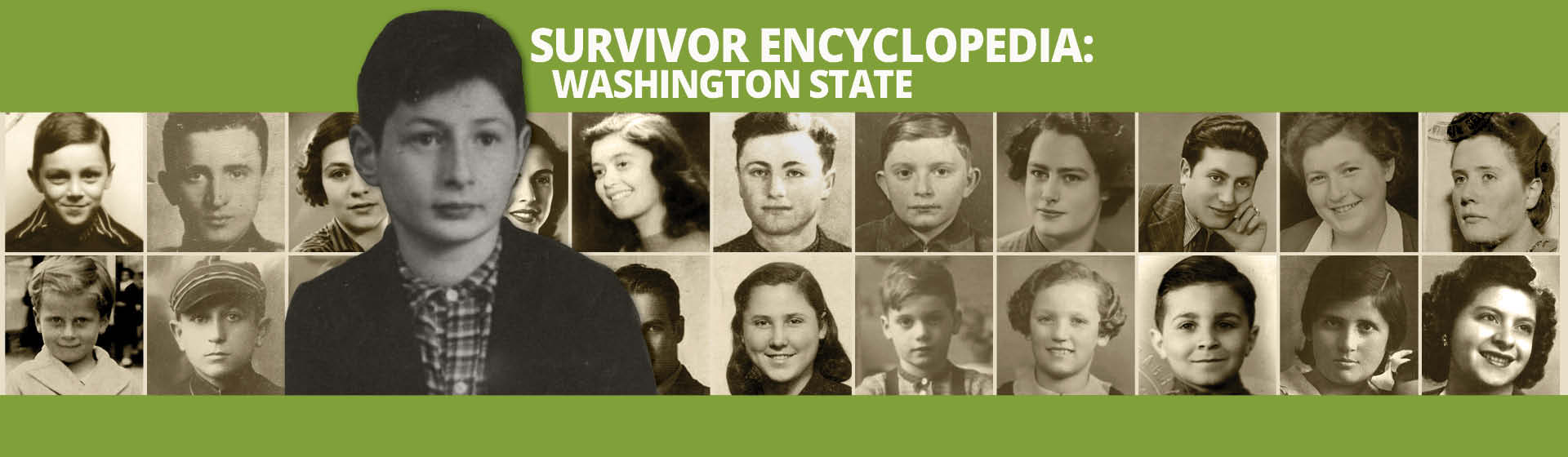


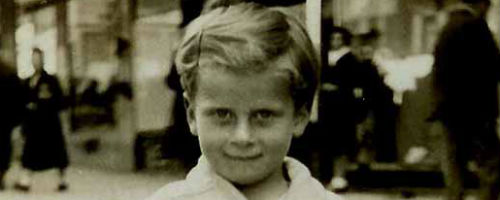
 “I was hidden with a Catholic family, a couple [with] no children. They pretended I was a cousin from the countryside."
-Agi Day
Agi Day (nee Zagorka Herzog) was born in Belgrade, Yugoslavia (now Serbia) in May 1940. Her family, being Jewish, escaped to Hungary when she was a baby, and during the last nine months of World War II Agi was hidden by Catholic people who posed her as one of their own.
In 1946, the growing threat of Communism again forced Agi and her family to flee. They escaped Hungary and then lived in several Displaced Persons camps in Austria.
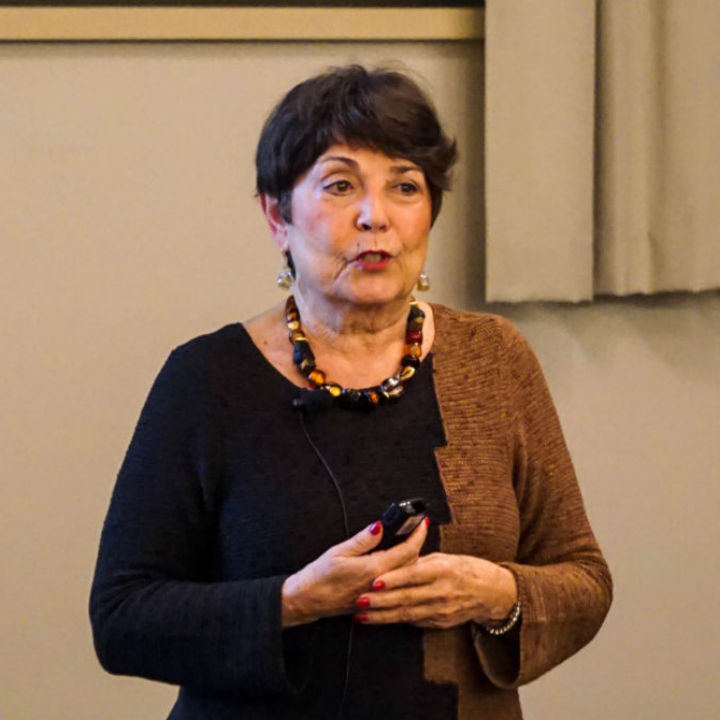
In 1951 at age 11, Agi joined her mother in Toronto, Ontario, where she grew up and then became a teacher. She taught elementary school and English as a Second Language in the Toronto schools until she moved to Montreal, Quebec. In Montreal she raised her children while studying French, and was active in numerous community organizations. 10 years later, Agi and her family moved to Seattle, where she continued her volunteer
activities and went back to school to get a Master’s degree in Organizational Communication.
Later , Agi pursued a career in real estate for about 15 years on Mercer Island. She is now retired but still involved as a volunteer for different organizations. Since 2014, Agi has spoken to schools and community groups about her experiences during the Holocaust as a member of the Holocaust Center Speakers Bureau.
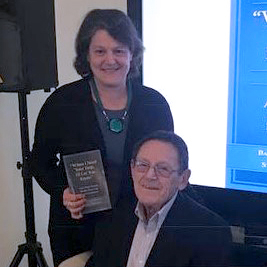
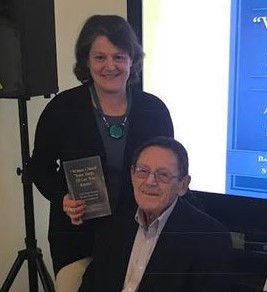 Barbara is the daughter of Holocaust survivor Steve Adler. She assisted her father in telling his story , and after he passed away in 2019, Barbara decided to continue his legacy.
Steve was born in Berlin, Germany in 1930, the younger son in a middle-class, Jewish family. In 1937, Steve’s mother, fearing for his safety due to anti-Jewish laws, enrolled Steve in a private Jewish school. The following year, the SS and Gestapo arrested more than 30,000 Jewish males during Kristallnacht. One of them was Steve’s own father Alfred. On November 10th, 1938, he was taken to Sachsenhausen concentration camp, where he was held prisoner for six weeks before his release on December 23rd.
Conditions for Jews continued to deteriorate. In January 1939, the Nazi government required all Jews to carry identity cards revealing their heritage, and danger became much more immediate for the Adlers. That March, Steve’s parents sent him alone to Hamburg to join a Kindertransport (children’s transport) going to England by ship. Kindertransports were organized with British government sanction, giving refuge to approximately 10,000 Jewish children from Germany, Austria and Czechoslovakia – not their parents. Steve arrived in London knowing only one sentence in English. During the war’s intense bombings, Steve was evacuated to a small English town with his classmates.
Unlike most other Kindertransport children, Steve was reunited with both his parents. In spring of 1940, Steve’s brother Ralph and their mother Ilse met Steve in London. His father joined them in the fall, and they then traveled by ship for twelve days across the Atlantic, settling with relatives in Chicago.
After many years in Illinois and Connecticut, in 1999 Steve and his wife Judy, moved to Seattle to be near Barbara and her two children. Steve was an active and beloved member of Holocaust Center for Humanity Speakers Bureau for two decades.
Barbara is an attorney, a mother, and recently started a non-profit organization to help folks in need with elder law. She is also the co-author, with Steve, of a 2017 book about families and aging, “When I Need Your Help I’ll Let You Know.” Barbara is very proud to share her father’s story as a Legacy Speaker in the Center’s Speakers Bureau.
Learn more about Barbara's father Steve Adler from his Survivor Encyclopedia page.
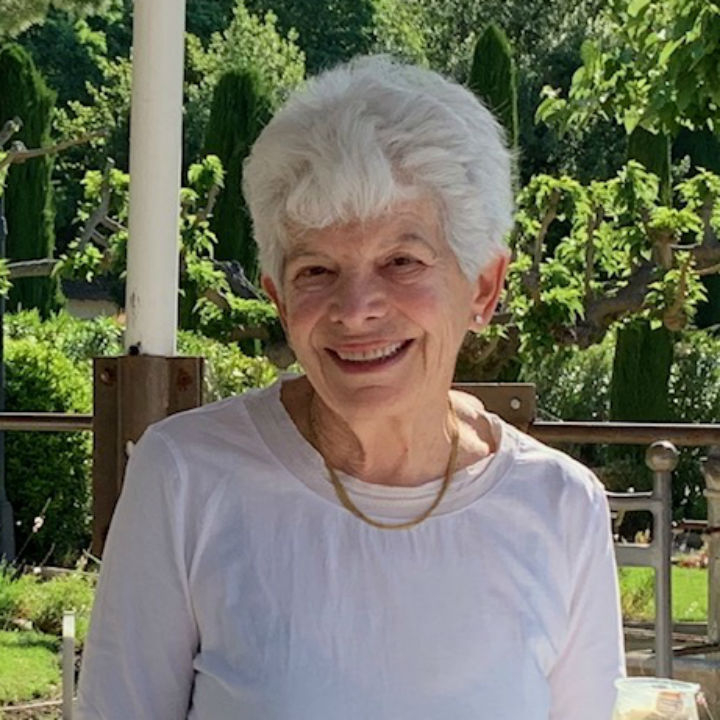
 Judy Schocken’s story is about how the Nazi rise to power affected her family in Czechoslovakia, changing their future forever.
Judy’s paternal grandfather lived in Czechoslovakia, where he had a business selling wholesale eggs. As antisemitism grew during the early 1900s, he moved his family several times within Czechoslovakia for their safety. With Hitler as chancellor of Germany since 1933, the borderlands of Germany and Czechoslovakia increasingly became a target for the Nazis’ territorial ambition. Judy’s father Frantisek “Frank” studied refrigeration in the United States in 1936, so the family could improve their egg business, but he returned to Czechoslovakia.
After several difficult moves in search of a better life, the family decided to send Frank, his wife Margaret, and their infant son, Peter, to the United States. The plan was to eventually have them send for the rest of the family. The Blochs were fortunate to have a relative in Seattle who served as a sponsor; the three obtained visas in 1938 and arrived in Seattle in January 1939, less than a year before World War II broke out.
The Bloch family changed their surname to “Block” and settled into life in Seattle. Judy and her older brother Steve were both born in the United States. Frank eventually returned to the egg business, and the whole Block clan spent lots of time with other Jewish refugee families from the same part of Czechoslovakia, particularly enjoying hiking and skiing together.
Unfortunately, no other immediate family members of Judy’s parents were able to leave Europe. Judy and her father both spent time researching their relatives’ fates – information that Judy describes in her presentation. She collected additional primary sources and family photos, and, with the help of the Holocaust Center for Humanity, put the pieces together.
As the daughter of those lucky enough to escape the Holocaust, Judy shares her story as a member of the Center ’s Speakers Bureau to tell about the effects of bigotry, bullying, and antisemitism. Judy and her husband Joe still live in the Seattle area, and have 4 children and many grandchildren.
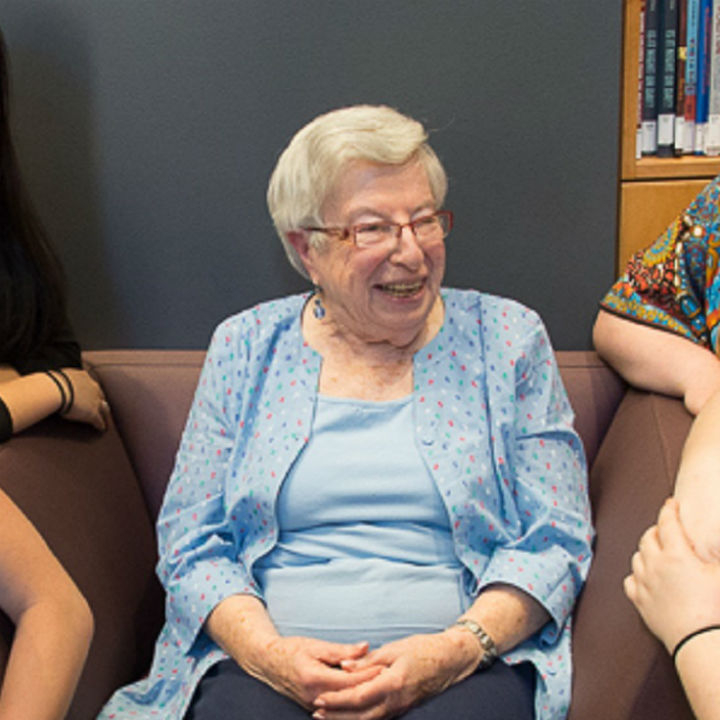
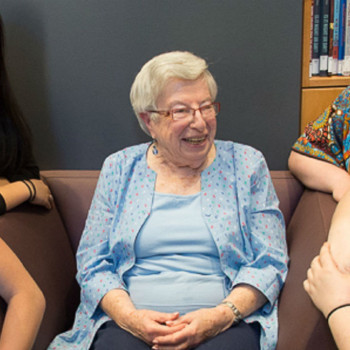 Born in Aschaffenburg, Germany in 1928, Charlotte was the youngest daughter of Fritz and Lucie Levy. Her family belonged to the local Jewish congregation where her father, a menswear salesman and World War I veteran, was the treasurer. Charlotte remembers having a happy childhood.
This began to change when the Nazi Party came to power in 1933. Hitler Youth paraded down the street, singing songs, and some Jewish students in Aschaffenburg were attacked. The ideals of the Nazi Party began to invade everyday life.
It wasn’t until the arrest of Charlotte’s father in 1936, however , that her happy childhood screeched to a halt. After the Nazi Party sent notice that all synagogue funds would be confiscated, Charlotte’s father distributed all of the money to the poorest members of the congregation and burned the books. The incident, and his subsequent arrest, convinced him that the time for Jews to live in Germany had ended.
While her father looked for a sponsor so they could immigrate to the United States, Charlotte and her sister were sent to the Esslingen Jewish Orphanage, run by a family friend. Very frightened, she realized that there are some things even parents do not have control over: “I had to take care of myself; I realized I am the only person who is always going to be with me.”
In 1938, the family secured sponsorship from a relative that had earlier immigrated to the U.S. On their way to leave the country, they stopped in Koblenz to see her grandfather. On the night of November 9th, their grandfather’s home was vandalized in what would later be known as Kristallnacht. While reporting this crime to the police, her father was arrested again. He was released when he showed proof they were leaving the country.
On December 25th, 1938, Charlotte and her family arrived in New York, where she spent the rest of her childhood. She raised three sons with her first husband Harry Sprung. She later married Norbert Wollheim. Both of her husbands were Holocaust survivors who had met each other in Auschwitz. In 1988 Charlotte met Holocaust educator Vladka Meed and became her assistant. They organized summer trips to Poland for teachers to learn about the Holocaust. In 2000, Charlotte moved to Seattle to be closer to her son Jeff. She now volunteers to read with elementary school children, and is an active member of the Holocaust Center Speakers Bureau.
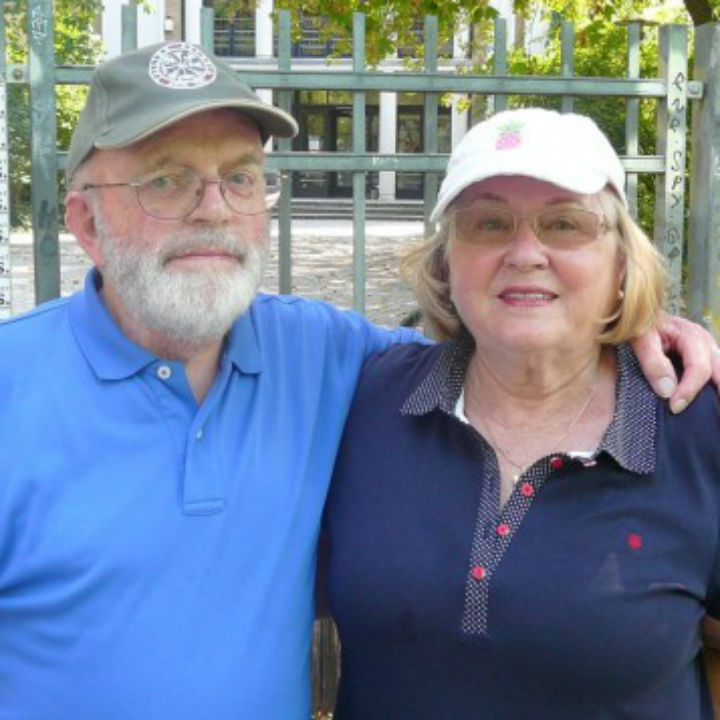
 Henry Haas was born to two Jewish families in Berlin Germany on April 8, 1938. In July, 1938, his parents Ivan Hans Haas (later John) and Gerda resolved to escape but had no way, literally, to immigrate to any country in the world. They fled for 12 months, traveling first to Slovakia, then the Czech Republic, Italy, Holland and France. Finally, in July 1939, with the assistance of a Jewish Refugee organization in Paris France, they were able to secure tickets on a ship to Shanghai, China. This was the only port in the world, which, from 1933 to 1941, admitted approximately 17,000 Jews. The Haas family ship journey took three weeks, traveling from Marseille, France to Port Said Egypt, through the Suez Canal to Djibouti on the horn of Africa, and eventually to the port of Shanghai. A city of 6 million at that time, the Haas family arrived in Shanghai without funds, in a temperature of 105 degrees Fahrenheit, and encountered an entirely foreign culture.
The following eight years were spent under Japanese occupation, living in an area that became the “Ghetto of Hongkew”, with their home being a single small room – no bathroom, no toilet, and no kitchen.
In 1947, two years after the end of WWII, the family arrived as non-English speaking refugees, in San Francisco. The Hebrew Immigrant Aid Society (HIAS), helped the Haas family to come to America. First they settled in Portland Oregon, then Centralia Washington, and, finally, in Tacoma Washington.
Kate, Henry ’s wife, born and brought up near London, England, came to Tacoma at age nineteen for a visit and stayed. Kate Haas has written the Haas family story in great detail. Together, Henry and Kate, with the use of photos, maps, and historic family documents, tell the story. Henry and his late mother Gerda, who lived to age 98, told this story for many years to school classes and other groups in the Tacoma area. Now, Henry has joined the speaker’s bureau to further share this memoir of antisemitism, during the Holocaust.
Henry graduated from the University of Puget Sound and obtained a law degree from the University of Washington in 1962. He continues practicing law to this day.
Page 16 of 20