






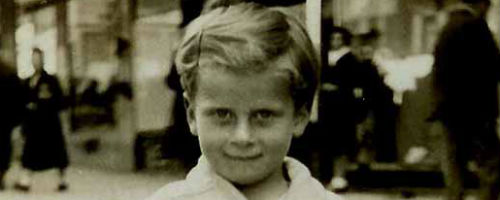
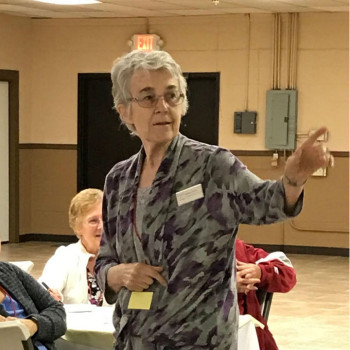
Daughter of Dutch rescuers, Ingrid shares the story of her family's bravery to hid 40 Jewish people during the Holocaust.
Ingrid Kanis Steppic was born in Holland in 1943. Her father, mother and older sisters hid 40 Jews in Holland during the Holocaust. She is now telling her story of this family of rescuers.
Ingrid’s family moved to Amersfoort only one day before the Germans invaded Holland on May 10th, 1940. Her father, Jan, was to be the manager of the town post office. His position allowed him to see returned mail and death notices. He realized that the Nazis were killing Jews long before many others found out, and he encouraged many Jews to go into hiding rather than register.
Jan helped Jews hide in Amersfoort or nearby Oldebroek, where he had grown up. The ‘hiders’ would first come to Ingrid’s house, and then her father would find a place for them. Her mother, Nel, was unfailingly vigilant to keep the Germans from discovering them. Her older siblings helped. Jan and Nel kept in touch with the people they had hidden.
Jan was also involved in the Dutch Underground. On one occasion, a raid had been planned on a distribution center to acquire the stamps for ration cards. Jan was forced to flee the scene and go underground. He was arrested and sent to Dachau in 1944.
Shortly after, Ingrid’s older sister Ali, was found with incriminating receipts from striking railroad workers, and was also arrested. Ali spent the rest of the war in a women’s prison, forced to mend clothing for German soldiers.
Without the pay from Jan’s job, or Ali’s help at home, Nel was hard-pressed to make ends meet during the infamous “Hunger Winter” of 1944-45, especially with a young child. The Kanis family continued to live in Amersfoort after the war was over. Ingrid married an American soldier and moved to the United States. In 1971, Ingrid’s parents were honored by Yad Vashem in Israel as "Righteous Among the Nations."
Between 20,000 and 30,000 Jews were hidden in Holland during the war. This included the Frank family. Of this number, about 2/3 survived.
Ingrid is a member of the Holocaust Center for Humanity’s Speakers Bureau, and presents her family’s story to local students and community groups.
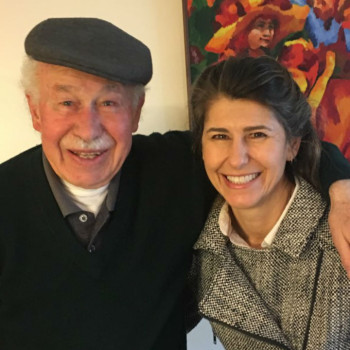
Daughter of Tom Lenda, a child survivor of Theresienstadt, Hana Meglathery shares her father's experiences.
Tom Lenda was born Tomas Lustig in 1936 in Plzen, Czechoslovakia (now Czech Republic). Tom’s father, Pavel (Paul) Lustig, was born in Domazlice, Czechoslovakia in 1904. The Lustig family moved to Plzen shortly after Paul was born. Tom’s mother, Irene Spitz, was born in Austria in 1909. Her family later moved to Decin, a city north of Prague.
The Lustig family was warm, loving, and hard working. Tom’s father Paul was educated in commerce and also attended a textile college in England. He was fluent in several languages and was an established textile manufacturers’ representative when Tom was born. Tom’s mother worked as a certified nurse in a hospital until her marriage. The Lustig family was part of a close-knit clan that was well established within the Czech community; they considered themselves proud Czechoslovak citizens of the Jewish religion.
The Nazi invasion of Czechoslovakia became a reality for the Lustig family on March 15, 1939. Little Tommy was almost three years old. Three years later, the family was sent to Terezin (Theresienstadt), a concentration camp 40 miles north of Prague.
The Lustig family was separated after their arrival at Terezin. Tom was placed in a heim (home) with other children. Irene started work as a nurse in the camp hospital, also her living quarters. Paul was assigned to a transportleitung (transportation) group and was deported to Auschwitz in fall 1944. Toward the end of the war, when the Soviet Army approached the camp, Paul escaped from Auschwitz with a small group and joined the Czechoslovak army. After liberation, Paul came back to Terezin to retrieve his family on May 25th, 1945, and the three were reunited.
Hana was born to Rose and Tom Lenda in 1966 in Czechoslovakia. The Lendas escaped from communist Czechoslovakia to Germany in 1968 and then moved to Australia before arriving in the United States in 1975. Tom's book, Children on Death Row, was published under his birth name, Tommy Lustig.
Today, Hana is an attorney in Seattle and has two children. For years, Hana helped her father with his presentations in schools. She is proud to carry on her father’s story, and officially became a member of the Speakers Bureau in 2019.
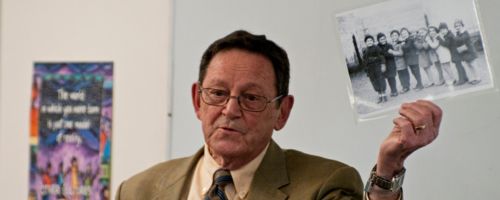
Photo: Tom Lenda with his daughter, Hana Meglathery, 2019.
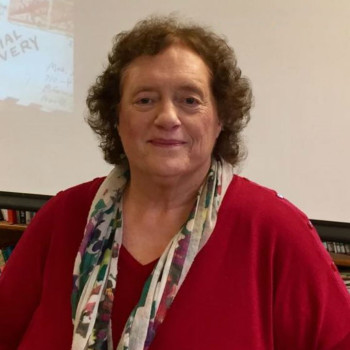
Clarice Wilsey, daughter of Army physici an Captain David Wilsey, M.D. who was one of 27 doctors who entered Dachau concentration camp at liberation, shares her father's story.
Dr. Wilsey was born in Wisconsin in 1914. After receiving his medical degree, he joined the military during World War II to serve as an Army physician. After serving in France and Germany, Dr. Wilsey arrived at Dachau in late April 1945. Prisoners were quarantined inside Dachau to wait for the allied commanders to see the atrocities, and to prevent the spread of deadly disease. The American physicians and medical staff risked their lives to bring healing to the 30,000 Dachau survivors.
Dr. Wilsey’s family knew very little about his wartime experience. In 2009, when his children were cleaning out the family home, they found for the first time a box of letters Dr. Wilsey had written to his wife Emily while serving in the military, including the Battle of the Bulge and Dachau. The letters had survived several moves and even a house fire. Dr. Wilsey asked his wife in several letters “to tell thousands so that millions will know what Dachau is and never forget the name of Dachau.” His daughter, Clarice, was deeply affected by the discovery of the letters. She believes that her calling is to speak the words he was unable to voice after the war.
Clarice Wilsey, M.A., was a university faculty member and administrator for 45 years. She is now retired to spend more time reminding audiences to “never forget ,” and is a member of the Holocaust Center for Humanity Speakers Bureau. In early 2020 Clarice and co-author Bob Welch published a memoir, Letters from Dachau: A Father's Witness of War, a Daughter's Dream of Peace. Find and order the book from Barnes and Noble or Amazon.
The collection of Dr. Wilsey’s 280+ letters and other materials are preserved at the Holocaust Center, and will be used in future exhibitions and for educational purposes.
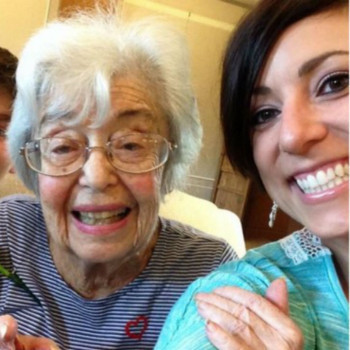
Granddaughter of Hungarian Auschwitz survivor Vera Frank Federman, Breeze Dahlberg shares her grandmother's story.
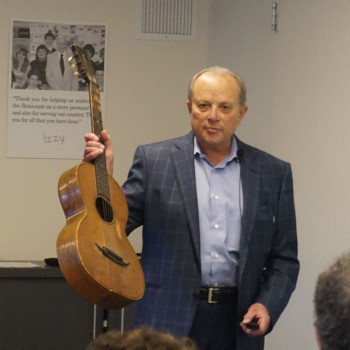
Steve Pruzan's grandparents and his mother fled Germany in 1939, and made their home in the United States.
Steve Pruzan’s grandparents, Max and Helene Schlonau, owned a large farm in Germany. They had owned and operated the farm at Warmsen, Germany for many generations. It was a gathering place for family who lived nearby. His grandfather, Max Schlonau served in World War I. He studied agriculture, enlarged his land holdings, used the most updated agricultural methods, and invented a breeding method for cattle. He was a leader in the area and in the small Jewish community in Warmsen.
Max and Helene married in 1923 and Steve’s mother, Inge was born in 1924. After 1933, when Hitler became Chancellor of Germany, things got progressively more difficult for the Schlonaus. Inge had to take a 5 hour train ride to Hanover in order to go to school as Jewish students were not allowed in German schools. Max was arrested on Kristallnacht and held at Buchenwald Concentration Camp for 3 weeks until his wife paid a fine to get him released.
By 1938 they had made plans to leave Germany. Helene had a cousin who was already settled in Seattle, Dr. Hans Lehmann. Lehman provided the Schlonau’s with an affidavit, and with Max’s agriculture experience, the family was able to expedite the visa process. They sailed from the Netherlands on September 1, 1939. The Schlonaus settled in Seattle where Dr. Lehmann was a prominent physician.
Steve’s mother, Inge attended Seattle University and graduated with a degree in nursing. She married Howard Pruzan, a Seattle attorney.
Steve is a practicing attorney in Seattle. He shares his family’s story as a member of the Speakers Bureau.
Page 8 of 20