





(1) Every public high school is encouraged to include in its curriculum instruction on the events of the period in modern world history known as the Holocaust, during which six million Jews and millions of non-Jews were exterminated. The instruction may also include other examples from both ancient and modern history where subcultures or large human populations have been eradicated by the acts of humankind. The studying of this material is a reaffirmation of the commitment of free peoples never again to permit such occurrences.
RCW 28A.300.115. Passed by the Washington State Legislature in 1992.
Initial Steps for Teaching about the Holocaust
1. Become acquainted with Holocaust history
2. Review "Guidelines for Teaching the Holocaust"
3. Develop your goals
4. Decide on a time frame
5. Choose themes
6. Find resources
1. Holocaust History
Holocaust history is complex. You do not need to be an expert, but you do need to have a general understanding of the history, Nazi ideology, and timeline of events.
A few suggested places to go for an overview:
2. Guidelines for Teaching the Holocaust
10 guidelines as suggested by the United States Holocaust Memorial Museum. For full descriptions of these guidelines, click here.
- Define the term Holocaust.
- The Holocaust was not an inevitable event.
- Avoid simple answers to complex history.
- Strive for precision of language.
- Strive for balance in establishing whose perspective informs your study of the Holocaust.
- Avoid comparisons of pain.
- Do not romanticize history to engage students' interest.
- Contextualize the history you are teaching.
- Translate statistics into people.
- Make responsible methodological choices.
3. Develop Your Goals
In his book, Teaching and Studying the Holocaust, Samuel Totten, noted Holocaust Educator and Professor of Curriculum and Instruction at the University of Arkansas, suggests asking yourself the following questions:
- Why is the Holocaust important to study?
- What do I perceive to be the most important lessons to be learned from the study of the Holocaust, and why?
- If I only have time to teach, for example, five different topics/aspects of the Holocaust, what would they be and why?
- What do I want my students to walk away with after a study of the Holocaust and why? If I can only plant one seed in the minds of my students – leaving it for them to ponder over the course of their lives - what would it be? Why?
Answering these questions is a great way to help narrow down which Holocaust related themes you may want to teach or study.
4. Decide on a Time Frame
The length of time available strongly influences which areas you will cover and which resources you will use.
Regardless of how much time you have or can use, we assure you that even a short lesson over a couple of days can impact students and increase awareness. The Center staff is more than willing to work with you on your needs and time frame.
5. Choose Themes
- Suggested topics to include as outlined by the Holocaust Center (pdf)
- The US Holocaust Memorial Museum has identified topic areas for teachers to consider when planning their lessons on the Holocaust - see their "Topics to Teach" as well as the Holocaust Encyclopedia.
The Holocaust Center staff is available to recommend the best books, videos/DVDs, websites, and lessons related to specific themes or topics.
6. Find Resources
In addition to the large collection of curricula at the Center, you will find literary and historical materials, posters and exhibits, videos and DVDs, artifacts, and primary source documents. Center staff is available for one-on-one consultation and can recommend materials that would be most appropriate for your group.
Almost all of the resources we suggest are available for loan from the Center at no cost to educators.
Some of the most effective and powerful resources we offer are the speakers on our Speakers Bureau. We are lucky enough to have eyewitnesses to the Holocaust who live in Washington State and volunteer their time to talk with students. We encourage you to follow the Speakers Bureau link to learn about the simple process of requesting a speaker to come to your class.
For a list of suggested resources by grade level, please see the annotated bibliographies for contents of the Holocaust teaching trunks:
5th/6th Grade Trunk
Middle School Trunk
High School Trunk
We hope these suggestions are helpful to you in your teaching of the Holocaust. Please contact us with any additional questions -
Architecture of Atrocity
Where can you interrupt the process?
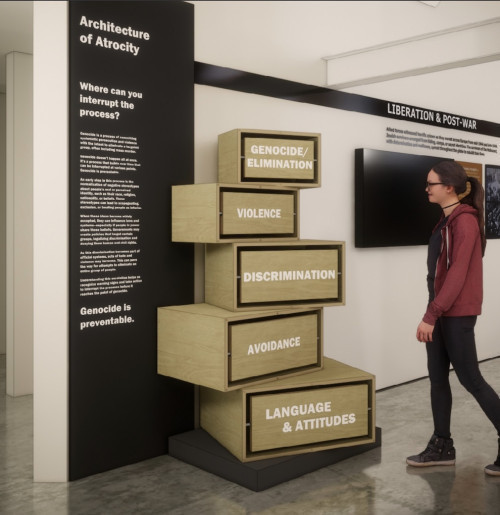 Genocide is a process of committing systematic persecution and violence with the intent to eliminate a targeted group, often including mass murder.
Genocide doesn’t happen all at once. It’s a process that builds over time that can be interrupted at various points. One element of this process is dividing a community into isolated groups in order to weaken their connection with other groups.
Language and Attitudes. This process of division begins with language and attitudes. This looks like the normalization of stereotypes about people’s real or perceived identities, such as their race, religion, nationality, or beliefs.
Avoidance. When these attitudes and beliefs become internalized and normalized, it can lead to actions of avoidance such as exclusion, treating people as inferior, or scapegoating.
Discrimination. Once these individual beliefs and actions become widely accepted or tolerated, policy leaders are empowered to enact discriminatory laws and systems. These policies target certain groups, legalizing discrimination and denying them human and civil rights.
Violence. As this discrimination becomes part of official systems, acts of hate and violence may increase.
Elimination/Genocide. This can create the conditions in which genocide or mass atrocities are possible.
Understanding this escalation helps us recognize the warning signs and take action to interrupt the process before it reaches the point of genocide.
Genocide is preventable.
Image: Installation at the Holocaust Center for Humanity: "Architecture of Atrocity."
Genocide
The phenomenon of genocide can be broadly understood as the process of identity-based group destruction.
The crime of genocide has been defined by Article 2 of the Convention on the Prevention and Punishment of the Crime of Genocide
Article II
In the present Convention, genocide means any of the following acts committed with intent to destroy, in whole or in part, a national, ethnical, racial or religious group, as such:
- Killing members of the group;
- Causing serious bodily or mental harm to members of the group;
- Deliberately inflicting on the group conditions of life calculated to bring about its physical destruction in whole or in part;
- Imposing measures intended to prevent births within the group;
- Forcibly transferring children of the group to another group.”
Read more about the Definition of Genocide
Lesson Plans for Teaching about Genocide
- Introduction to Genocide
- Teaching about Genocide
- Modern-Day Genocide, A Study of the Rohingya Minority in Burma
- Crimes Against Humanity and Civilization: The Genocide of the Armenians
The Holocaust Center has partnered with the Seattle Times Newspapers In Education (NIE) Program to create and publish two series of articles. The articles are geared towards students in grades 7-12. Each series includes a teacher guide.
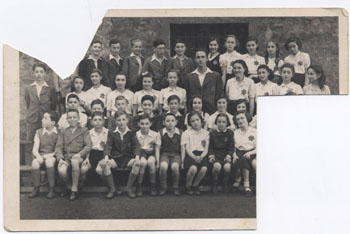 Stories Among Us: Personal Accounts of Genocide
Published in the Seattle Times on Wednesdays, April 9 - June 11, 2008, this 10-article series focuses on the stories of individuals in our community directly affected by genocide during the past century.
Articles in Series:
- Introduction
- Mannig's Story: A Survivor of the Armenian Genocide
- Morgan's Story: The Roma/Sinti
- Magda's Story: An Auschwitz Survivor
- Peter's Story: A Dutch Holocaust Survivor
- Frieda's Story: A Czech Holocaust Survivor
- Marie's Story: A Witness to the Long-term Consequences of the Rwandan Genocide
- Selena's Story: A Survivor of the Bosnian Genocide
- Agnes' Story: From Sudan to Seattle
- "What can we learn from the stories of Holocaust Survivors?" - Holocaust Writing and Art Contest Winners
Teacher Guide - includes background information, discussion questions, activities, and suggested resources for each of the above articles.

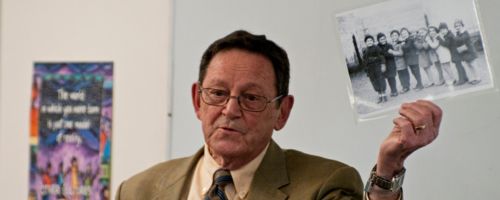
"I tell the story because I believe that one person can make a difference."
- Holocaust survivor Henry Friedman
"Survivor Voices: Bearing Witness from the Holocaust to Today" is a 25-minute educational documentary produced by the Holocaust Center for Humanity. This video weaves the testimonies of local Holocaust survivors with contemporary issues, racism, genocide, and the difference each one of us can make. Through personal stories, "Survivor Voices" illustrates the escalation of the Holocaust from racist attitudes to genocide. It is through these stories and through this history that we confront the past and work to build a world free of racism and hatred in all its forms. For grades 7 and up.
A special thank you to Arlene B. Ehrlich and the Loeb Family Charitable Foundation for their support of this film.
This film was also made possible by funding from 4Culture and The Claims Conference.
Teaching Materials
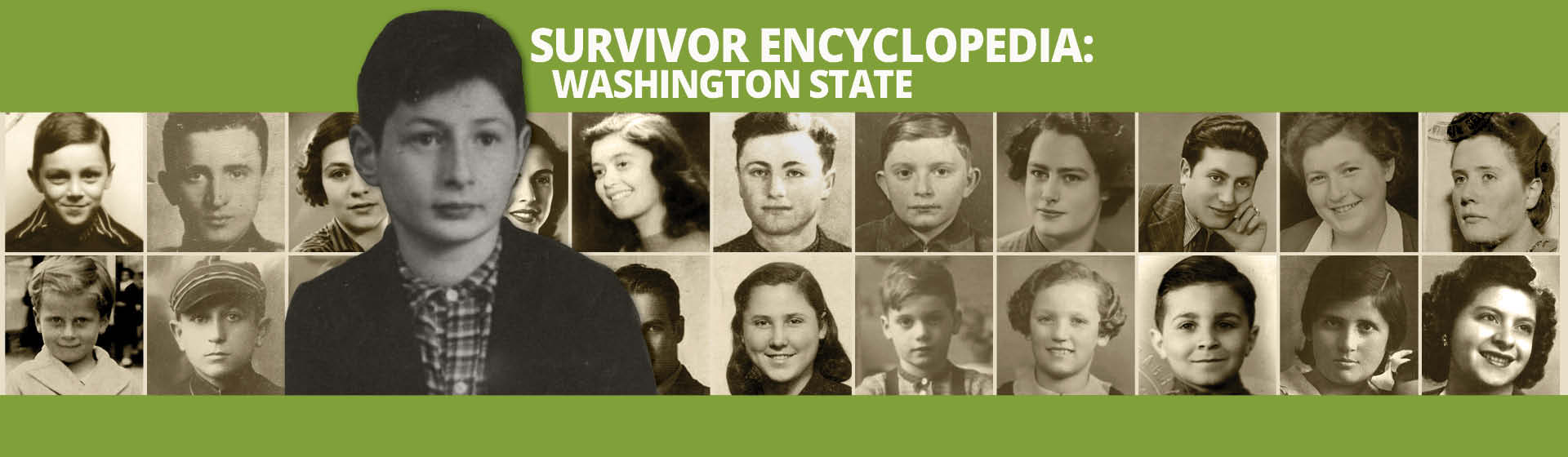
Survivor Encyclopedia: Washington State
Find out more about Steve Adler, Henry Friedman, Laureen Nussbaum, and Magda Schaloum, the survivors featured in the film.
Survivor Voices - Viewer's Guide to the Film
Stills:
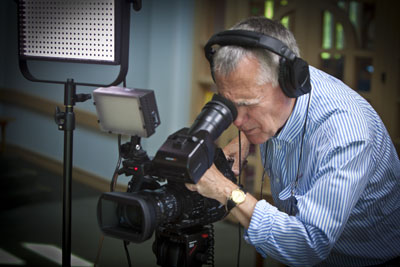 |
Don Porter filming |
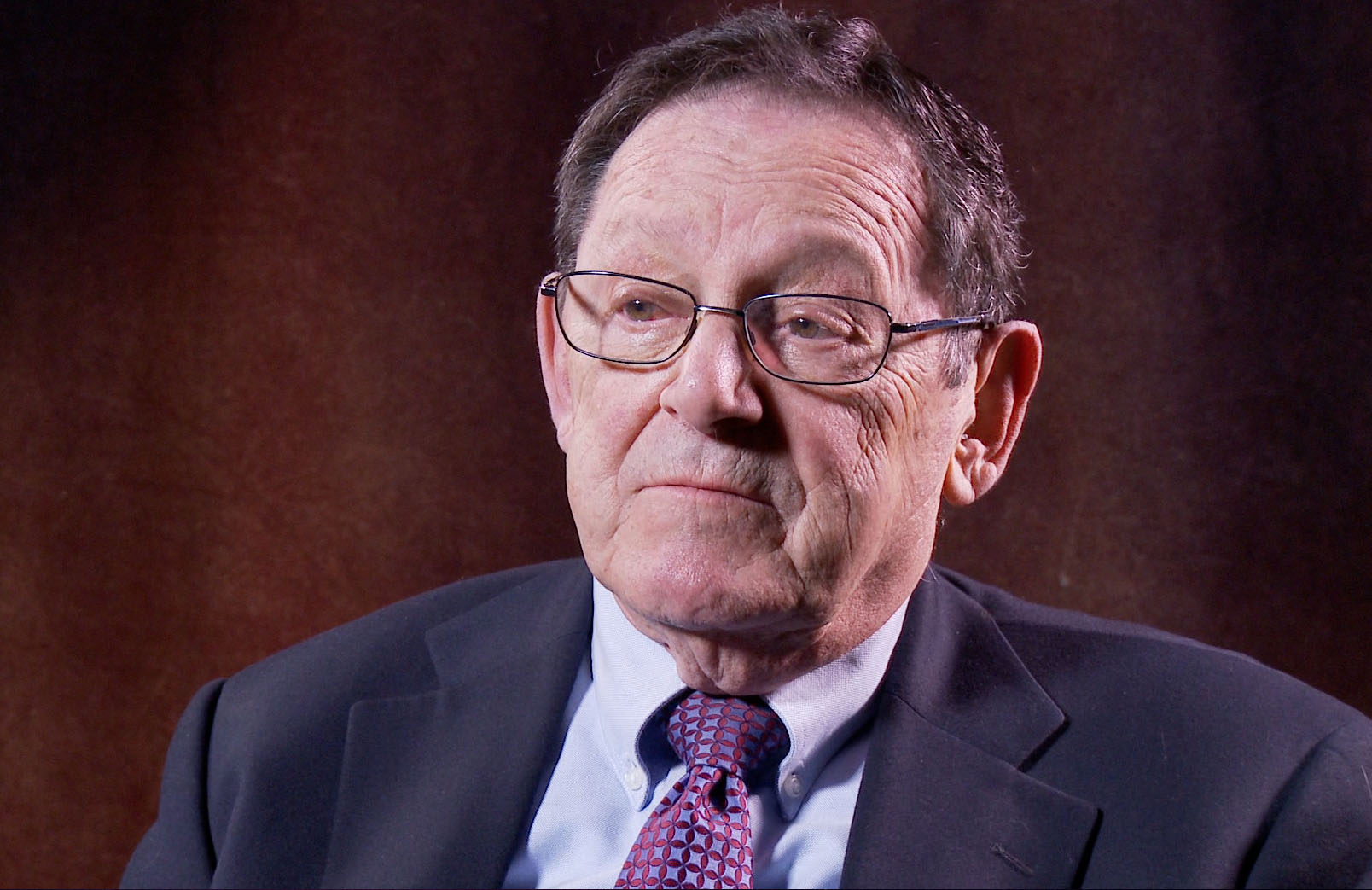 |
Holocaust survivor Steve Adler |
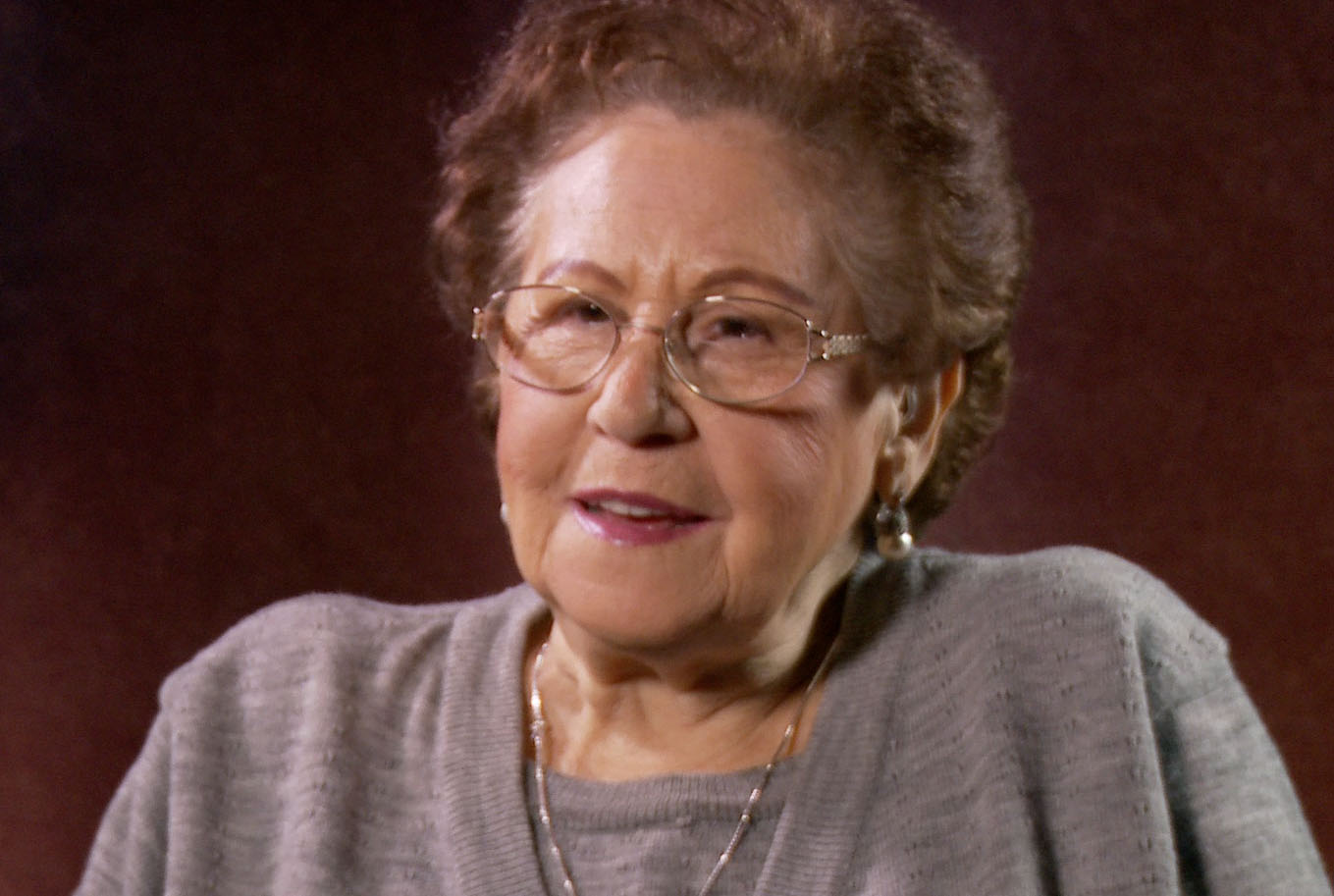 |
Holocaust survivor Magda Schaloum |
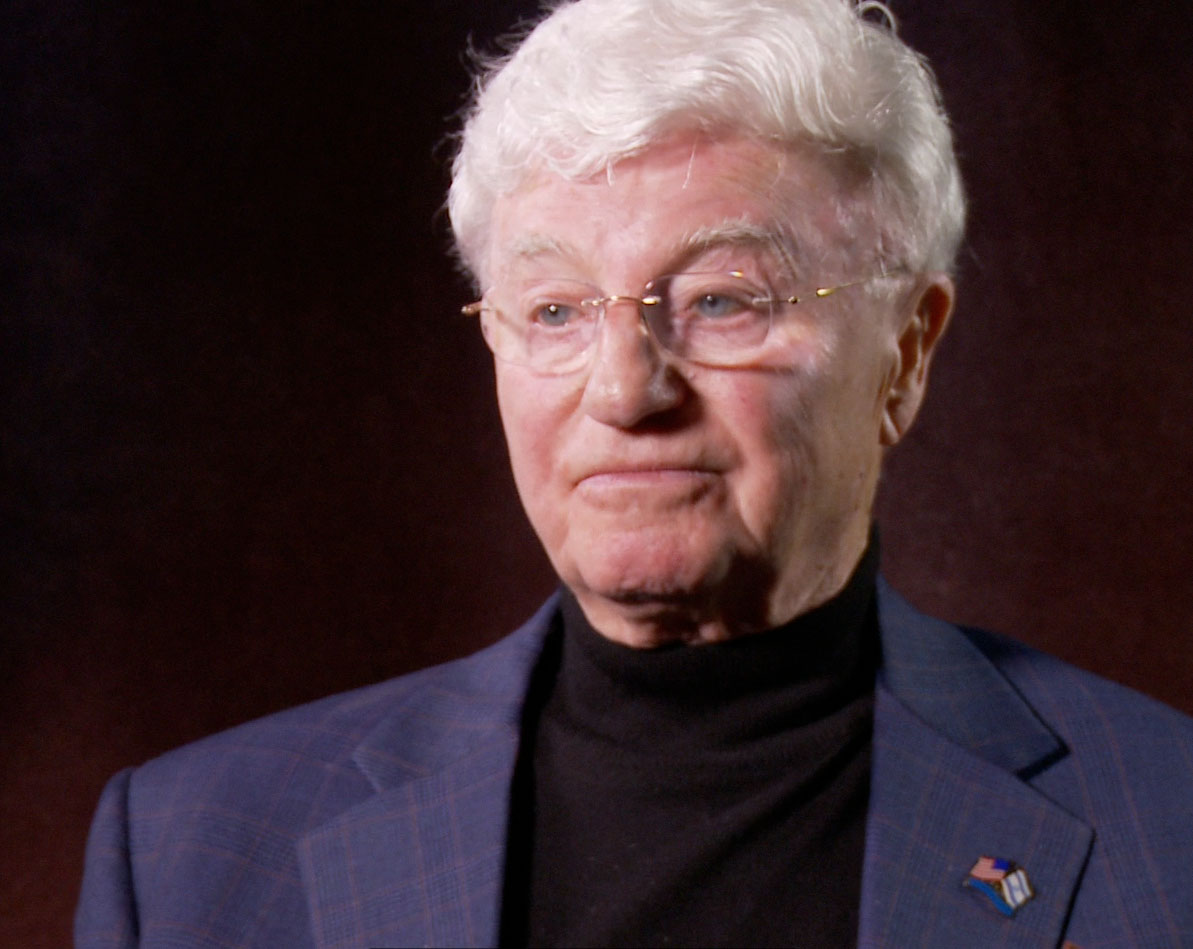 |
Holocaust survivor Henry Friedman |
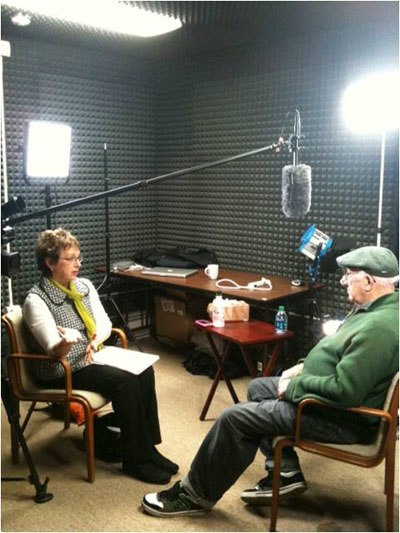 |
Laurie Warshal Cohen interviewing survivors for the film |