






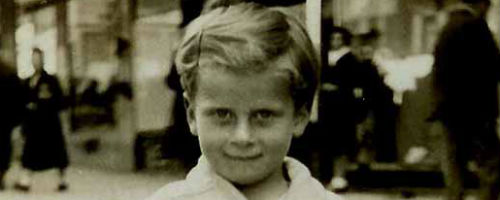
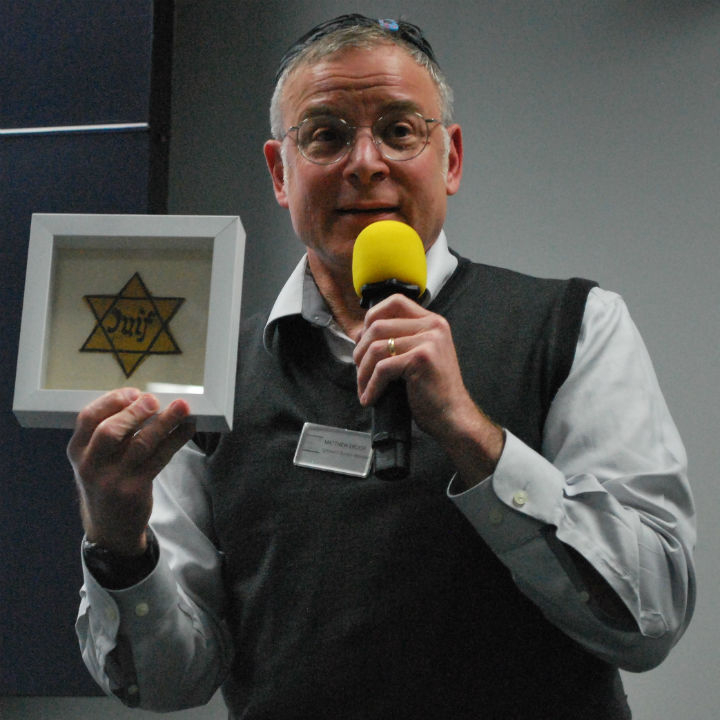
 Matthew Erlich’s mother, Felicia Lewkowicz, was born in Krakow, Poland in 1923. Felicia was one of seven children, four girls and three boys.
On March 3, 1941, the Nazis established the Krakow ghetto and Jews were required to wear armbands. Felicia and one brother were sent by the Nazis to the Krakow ghetto while her mother and other siblings were sent to Tarnow, 70 miles from Krakow. Conditions in the ghetto were terrible, with very little food and illness and diseases running rampant. Luckily, Felicia was able to get work outside the ghetto, cleaning the offices of German officers. One day, she did not return to the ghetto, escaping onto a train which would take her to Vienna, Austria. On the way, she stopped in Tarnow where she saw her family for the last time.
In Vienna, Felicia was able to acquire false identity papers and adopted the name Sophie Sterner. She worked at the Hess Hotel and the Hungarian King Hotel. Starting in the kitchen, she eventually worked her way up to housekeeping, assigned to the Hess family’s personal rooms. When a friend was caught smuggling clothes, a photo of Felicia was found among the clothes and she fled the hotel for fear of being caught.
Changing her name to Stephanie Heir, Felicia was able to find a position as a nanny and, later, at the Astoria Hotel. The authorities caught up with Felicia and she was sent to Auschwitz as a political prisoner.
Felici a arrived in Auschwitz in August of 1944 and was tattooed with the number A-25049. Shortly after her arrival, she was forced to give blood for German soldiers. To stop them from taking all her blood, a German nurse and fellow prisoner changed Felicia’s blood type on her records, and gave her bread and sausage to eat. Felicia attributes this act to helping her survive.
Felicia was transported with a group of 3,000 prisoners to Bergen-Belsen in October 1944. At the end of July 1944, there were 7,300 prisoners interned at Bergen-Belsen. By April 1945, this number had increased to 60,000. Overcrowding, poor sanitation, and lack of adequate food, water, and shelter led to an outbreak of disease. Tens of thousands perished in the first few months of 1945 and the bodies were often left in barracks for days before being removed. In March 1945, Felicia got Typhus. Her cousin, Estia, who she discovered on the transport to the camp with her, kept her alive by encouraging her to eat and get up.
Bergen-Belsen was liberated by the British on April 15, 1945. In May, Felicia and Estia were taken to a Displaced Persons (DP) camp in Lingen, Germany. In the camp, Felicia worked as a translator and met her future husband and fellow survivor, Arthur. After 6 or 7 months in the DP camp, Felicia moved to Paris, where her sister Lola was living, while Arthur completed his studies in England. Felicia and Arthur were married in England on July 3, 1948. They later moved to Canada and then the USA. The couple had four sons: Richard, Andrew, Michael, and Matthew.
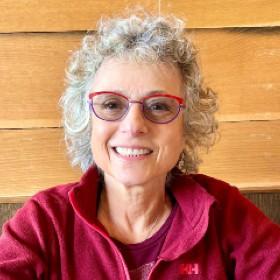
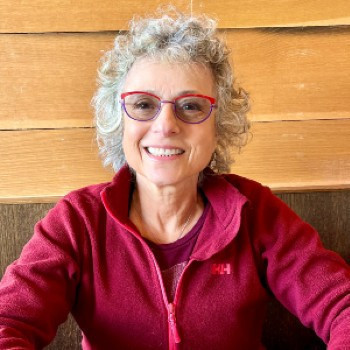
Beth Lippman presents an expansive and compelling story about her mother’s experiences and survival during the Holocaust. Her mother, Basia Lemberger, was born in Lodz, Poland in 1925. She had a younger sister and brother.
Basia had a difficult childhood. She was very aware of antisemitism and poverty in her life.
She and her sister Laya registered for a forced labor camp with the false promise that her parents would receive compensation. She never saw her parents again after 1940. She was in a labor camp in the Posnan area in Poland for 3 years working on construction projects for the Reich.
When the labor was completed, Basia was deported to Auschwitz where she was imprisoned for 2 years. In 1945, after a death march from Auschwitz to Ravensbruck, she was able to escape and eventually get to an orphanage in France.
Basia came to the United States sponsored by an uncle in New York, and found she had to make her own way.
She married and had a family, but suffered greatly from her traumatic experiences.
Beth lives East of Seattle, and has two grown children, including a son who lives in the area. She feels gratified to share her mother's story, which she began hearing at a very young age.
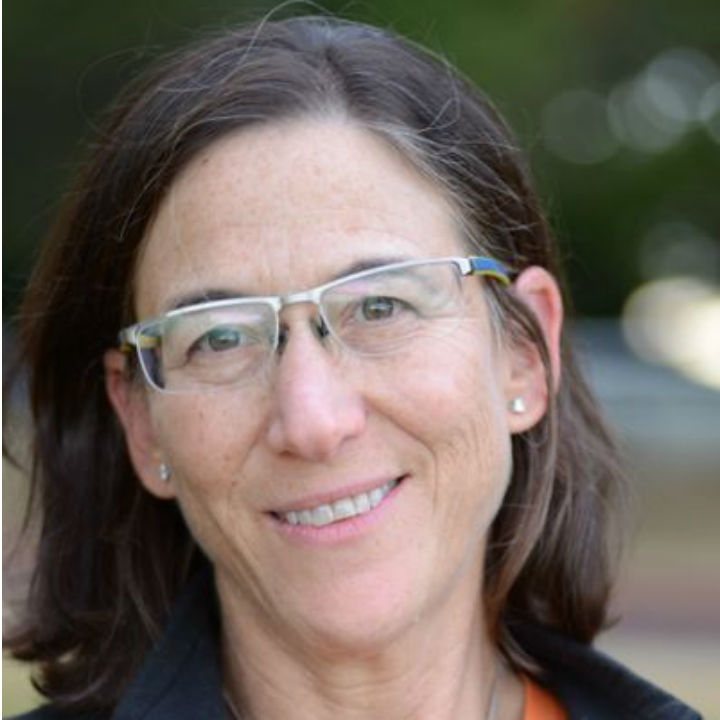
 Karen Treiger shares the survival story of her mother- and father-in-law, Esther and Sam Goldberg. Karen knew that they had amazing stories of survival, but she wanted to fully understand their struggles and experiences and began to research their stories.
Esther and Sam both grew up in Poland prior to the outbreak of World War II. Sam was drafted into the Soviet Army and imprisoned in a German POW Camp. He escaped, but was eventually deported to the Nazi death camp Treblinka. In 1943, Sam escaped from Treblinka and found safety in a nearby forest, where he met Esther. Esther had already established a hiding place there after fleeing Stozeck, Poland.
Esther and Sam survived in hiding with the help of the non-Jewish Stys families. After the birth of their first child and several years in displaced persons camps, the Goldbergs came to the United States in 1949.
In 2016, Karen and her family traveled to Poland to meet the children of the Stys families, and thank them for their courage in saving the Goldbergs’ lives. This incredible connection has continued to inspire Karen to tell her family’s story, and now to share it with students and other groups as a Legacy Speaker for the Holocaust Center’s Speakers Bureau.
Karen Treiger's award-winning book, My Soul is Filled with Joy: A Holocaust Story, details the story of the Goldbergs and her own journey in uncovering this history. She is a lawyer and has four adult children with her husband – Sam and Esther’s son – and resides in Seattle.

 Jessica Fenton grew up in South Florida very close to her grandparents, Natalie and Murray Borenstein. Jessica knew that her grandparents and their friends and neighbors were Holocaust survivors, which drove her to learn more and ensure their legacies lived on.
Murray and Natalie were both Polish Jews. Natalie was born Naska Grunwald in Sosnowiec in 1918. Natalie and her sisters, all skilled seamstresses, sewed for Nazi wives while imprisoned in the Sosnowiec ghetto. Natalie then suffered terrible conditions in several forced labor camps of the Nazis, including a sub-camp of Auschwitz. Natalie was liberated at Ravensbruck concentration camp in 1945.
Murray (originally Motek) Borenstein was born in Lublin in 1919. He survived by escaping the Nazis en route to the Majdanek concentration camp, and subsequently taking on a non-Jewish Polish identity. With his new identity, Murray was able to work for German factories and businesses until the end of the war.
The two both managed to get to a Displaced Persons camp in Stuttgart, Germany in 1945. While there, Murray taught Hebrew, and Natalie was as a student. They met in class and fell in love. The couple married in 1946, and Jessica’s mother Esther was born in Germany in 1948. The family immigrated to New York in 1949, where they raised two more children and worked hard to create their new life. Later, the Borensteins retired to Florida.
As an adult, Jessica dug deeper to learn Natalie and Murray’s past. Jessica collected documents, video, and photos of her grandparents’ lives and shared them with the Holocaust Center for Humanity to create her presentation. She officially joined the Holocaust Center Speakers Bureau in 2020. Jessica and her husband live in Bellevue with their three sons.
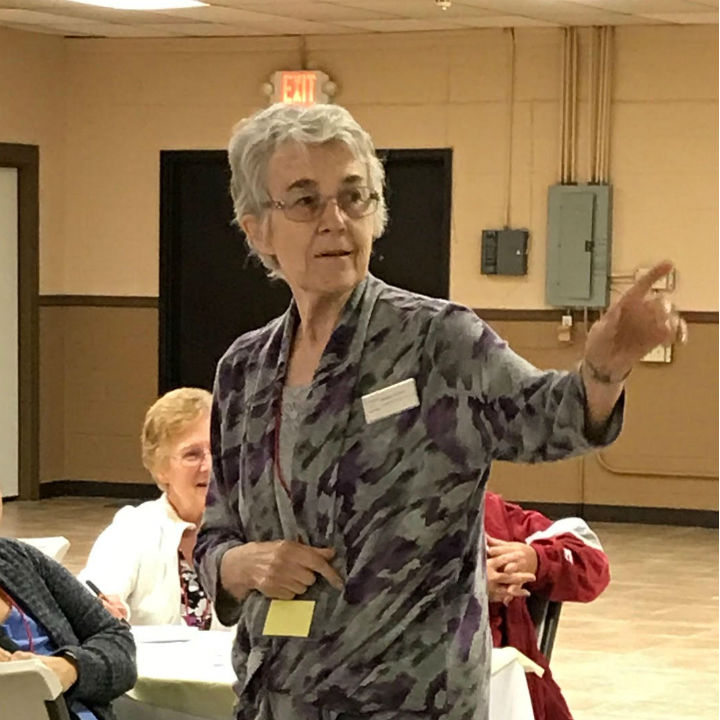
Daughter of Dutch rescuers, Ingrid shares the story of her family's bravery to hid 40 Jewish people during the Holocaust.
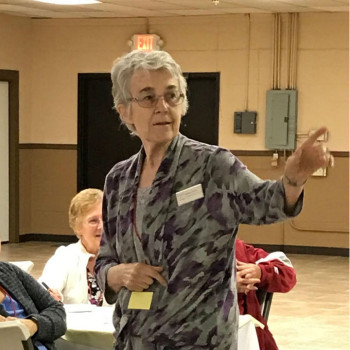 Ingrid Kanis Steppic was born in Holland in 1943. Her father, mother and older sisters hid 40 Jews in Holland during the Holocaust. She is now telling her story of this family of rescuers.
Ingrid’s family moved to Amersfoort only one day before the Germans invaded Holland on May 10th, 1940. Her father, Jan, was to be the manager of the town post office. His position allowed him to see returned mail and death notices. He realized that the Nazis were killing Jews long before many others found out, and he encouraged many Jews to go into hiding rather than register.
Jan helped Jews hide in Amersfoort or nearby Oldebroek, where he had grown up. The ‘hiders’ would first come to Ingrid’s house, and then her father would find a place for them. Her mother, Nel, was unfailingly vigilant to keep the Germans from discovering them. Her older siblings helped. Jan and Nel kept in touch with the people they had hidden.
Jan was also involved in the Dutch Underground. On one occasion, a raid had been planned on a distribution center to acquire the stamps for ration cards. Jan was forced to flee the scene and go underground. He was arrested and sent to Dachau in 1944.
Shortly after, Ingrid’s older sister Ali, was found with incriminating receipts from striking railroad workers, and was also arrested. Ali spent the rest of the war in a women’s prison, forced to mend clothing for German soldiers.
Without the pay from Jan’s job, or Ali’s help at home, Nel was hard-pressed to make ends meet during the infamous “Hunger Winter” of 1944-45, especially with a young child. The Kanis family continued to live in Amersfoort after the war was over. Ingrid married an American soldier and moved to the United States. In 1971, Ingrid’s parents were honored by Yad Vashem in Israel as "Righteous Among the Nations."
Between 20,000 and 30,000 Jews were hidden in Holland during the war. This included the Frank family. Of this number, about 2/3 survived.
Ingrid is a member of the Holocaust Center for Humanity’s Speakers Bureau, and presents her family’s story to local students and community groups.
Page 18 of 20