




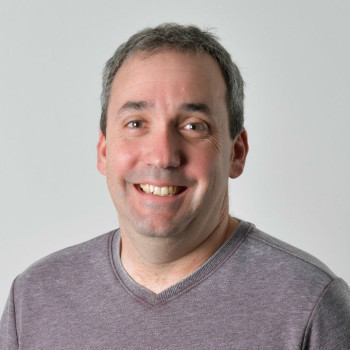
Grandchild of four Holocaust survivors, Arik Cohen tells their stories of perseverance, luck, and resilience while calculating the incredible odds of their survival.
Arik's maternal grandparents, Arye Schneider and Masha Klein, were born in Lithuania. Arye was born in Šaukėnai (Shukyan), Lithuania, where in 1941 nearly the whole Jewish population was murdered. Arye escaped and made his way to the Siauliai (Shavli) ghetto, where he met his wife Masha, a teacher who hailed from Neverenai (Nevaran). After the Shavli Ghetto massacre in November 1943, Arye and Masha hid in the woods for eight months until the Soviet Army liberated Lithuania.
Arik's paternal grandparents were from the Transylvania region in Romania. His grandfather Emil Kohn grew up in Suplac, while his grandmother Eva Hirsch was from Gherla. In May 1944, Emil and Eva were in Oradea when the ghetto was formed along with 35,000 other Jews, and not long after they were both deported to Auschwitz. After being separated upon arrival at Auschwitz, Eva was then sent to Stutthof to be used as slave labor, until she was forced on a death march in January 1945 and eventually liberated by the Soviet Army. Emil was liberated from Buchenwald in April of 1945 and found his way back to Eva.
Amazingly, both couples ended up living in the small beach town of Nahariya, Israel, and two of their children (Arik's parents) met and married. Today Arik lives in Bellevue, works at Microsoft, and shares his grandparents' stories.
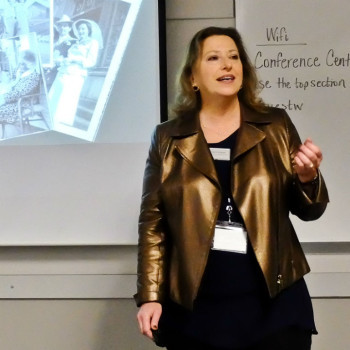
The daughter of two survivors, Naomi tells the stories of her parents from primary source documents and historical records.
Naomi is the daughter of two Holocaust survivors. She tells the stories of both of her parents with details from primary source documents and historical records. Their survival is truly remarkable.
In 1938, Naomi’s father Eric Weiss, attended a rally in Vienna after the Germans occupied Austria. He sensed that he had to get his parents out of Vienna and escape himself. He arranged for his parents to take an Eastern escape route through Russia to Yokahama, Japan and finall y to Portland, Oregon. Eric’s acceptance to the Hebrew University allowed him to leave Germany for what was then Palestine under British rule (now Israel). While in Palestine, Eric was recruited to work for as a spy for the British and traveled to Egypt, Algiers, Tunisia, Libya, and Italy in that capacity. He served from 1939-1944.
Naomi’s mother, Gerda Feldmann, was born in 1923 in a small town in what is now the Czech Republic. The Germans invaded Czechoslovakia in 1939 when Gerda was 16. She was sent to a series of slave labor camps in Poland and was finally liberated by British forces at Bergen-Belsen. Gerda, ill with typhus, was sent by the Red Cross to Sweden to recuperate, and eventually she too arrived in Palestine.
Gerda and Eric met in Israel, but Eric left in 1950, traveling to Portland to reunite with his parents. Gerda followed and they were married in 1950. Naomi grew up in Portland hearing parts of these stories. Her mother died when Naomi was 17, but her father lived to be 100.
Naomi calls her story, “Resilience: My Family Story .” She gathered all the documents and pictures she could find, consulted with relatives, and researched many details of this story. Her hope, as one of the Holocaust Center’s Legacy Speakers, is to reach young people and help them to understand the way our lives can be threatened, and what each one of us can do to make a difference.
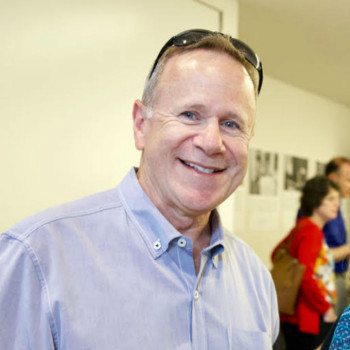
Jack Schaloum is the son of Holocaust survivor Magda Schaloum, a Hungarian survivor of Auschwitz and other concentration camps.
Magda was born to a loving family in 1922 in Gyor, Hungary. Following the German occupation of Hungary on March 19, 1944, the Nazis began systematicall y depriving Jews of their rights and forcing them into ghettos. They forced Magda and her family to leave their home and deported Magda, her brother and mother to Auschwitz.
Through the window of the cattle car, Magda saw her father desperately trying to give them a package filled with food and essentials. The SS guards treated him brutally, but took the package and told him they would give it to his family. Instead, the SS guards kept it for themselves. Magda’s father was held for forced labor in the coal mines, and the Nazis eventually transported him to the Buchenwald slave labor camp in Germany. Magda’s sister avoided deportation thanks to one of the protective papers from the Swedish diplomat Raoul Wallenberg, later declared a Righteous Among the Nations.
After riding for days in the fetid cattle car, Magda arrived in Auschwitz, only to be separated from her brother, 15, and her mother, 56. The Nazis forced Magda to processing where they tattooed a number on her arm.
At Mühldorf, (another slave labor camp) in April, 1945, Magda met the man she would eventually marry: Mr. Izak Schaloum, a Sephardic native of Salonika, Greece. Their stay at Mühldorf was brief. The Nazis loaded them onto a cattle wagon with other survivors to be transported to an unknown spot to be murdered, but Allied troops liberated them along the way.
Magda passed away in June 2015. Her son Jack is a member of the Holocaust Center for Humanity's Speakers Bureau and is carrying on his mother’s legacy by sharing her story.
To learn about Magda's story, visit the Survivor Encyclopedia.
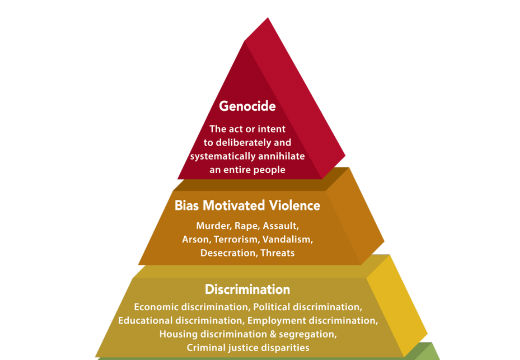
Examining the escalation of hate from bias attitudes to genocide.
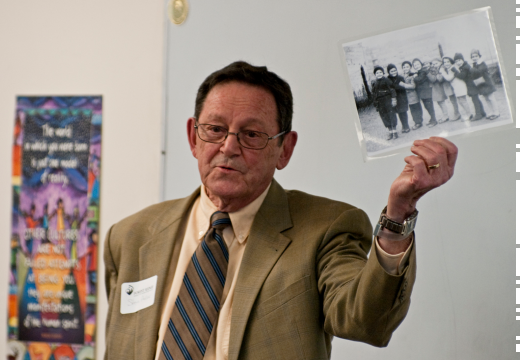
By the end of their unit/lessons, students will achieve the following learning outcomes.
Page 9 of 20