Charlotte Wollheim
1928-
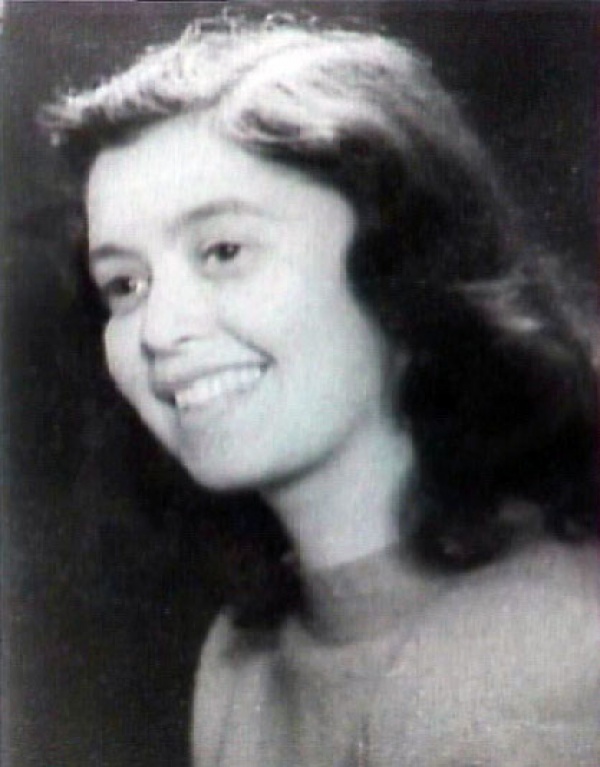
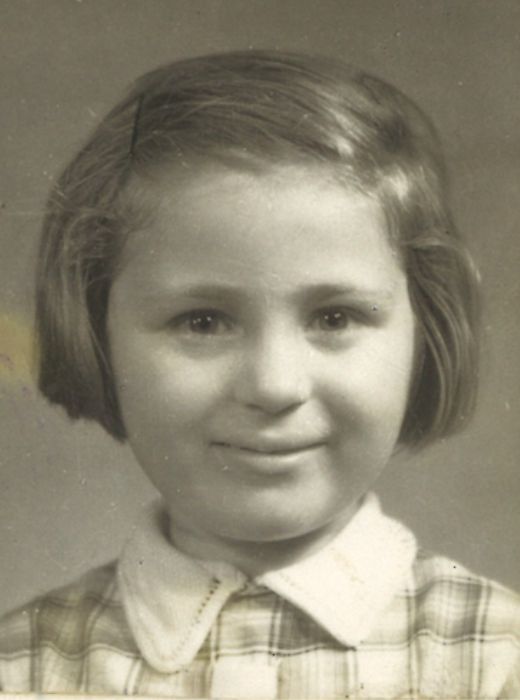
Born in Aschaffenburg, Germany in 1928, Charlotte was the youngest daughter of Fritz and Lucie Levy. Her father was a menswear salesman and World War I veteran. Her family belonged to the local Jewish congregation where her father was the treasurer. Charlotte remembers having a happy childhood.
Charlotte recalls that this began to change when the Nazi Party came to power in 1933. Hitler Youth paraded down the street, singing songs, and some Jewish students in Aschaffenburg were attacked.
It wasn’t until the arrest of Charlotte’s father in 1936, however, that her happy childhood screeched to a halt. After the Nazi Party sent notice that all synagogue funds would be confiscated, Charlotte’s father distributed all of the money to the poorest members of the congregation and burned the account books. The incident, and his subsequent arrest, convinced him that the time for Jews to live in Germany had ended.
While her father looked for a sponsor so they could immigrate to the United States, Charlotte and her sister were sent to the Esslingen Jewish Orphanage, run by a family friend. Very frightened, she realized that there are some things even parents do not have control over: “I had to take care of myself, she realized, “ I am the only person who is always going to be with me.”
In 1938, her family secured sponsorship from a relative who had already immigrated to the U.S. On their way to leave the country, they stopped in Koblenz, Germany to see her grandfather. On the night of November 9th, their grandfather’s home was vandalized in what would later be known as Kristallnacht. While reporting this crime to the police, her father was arrested again. He was released only when he showed proof they were leaving the country.
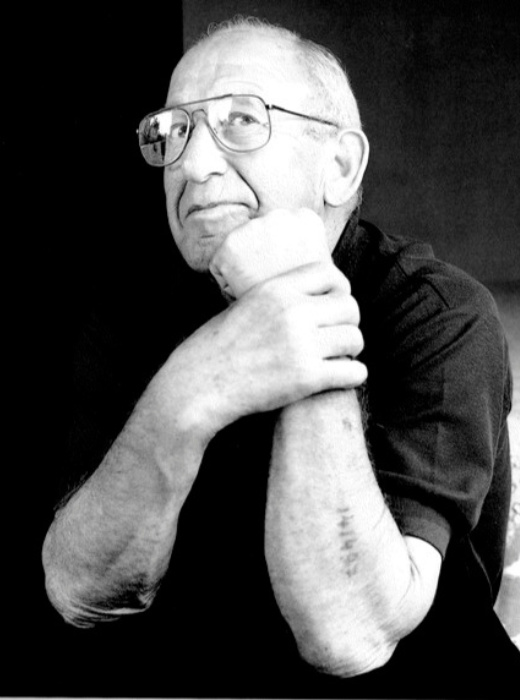
On December 25th, 1938, Charlotte and her family arrived in New York, where she spent the rest of her childhood. She raised three sons with her first husband Harry Sprung, and then she married Norbert Wollheim. (The two were also Holocaust survivors who had met in Auschwitz.) In 1988 Charlotte met Holocaust educator Vladka Meed, who developed the first program to educate teachers by taking them on summer study trips to Poland to learn about the Holocaust. Charlotte became her assistant.
In 2000, Charlotte moved to Seattle to be closer to her family.
Charlotte is a member of the Holocaust Center Speakers Bureau.
Video Testimony – Charlotte Wollheim
Testimony
Full Testimony
Photo Gallery – Charlotte Wollheim
C. Wollheim Gallery 1
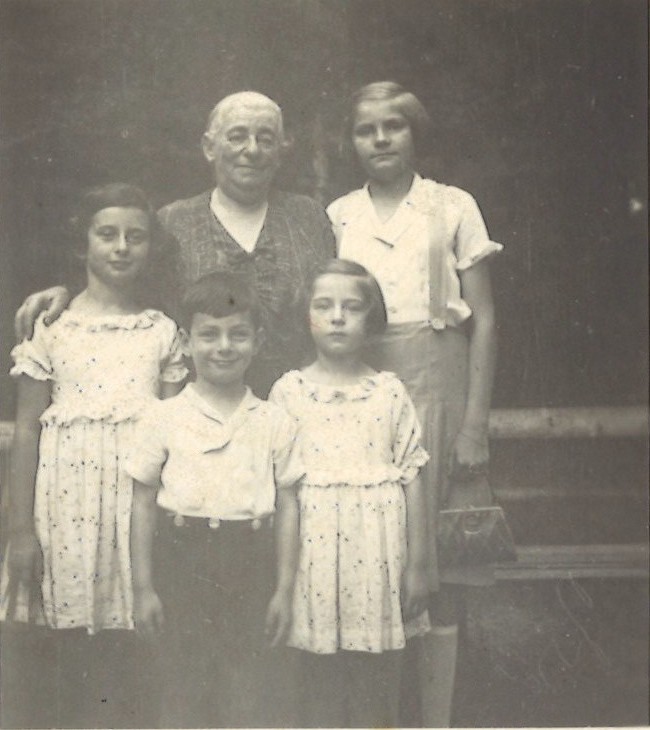
Charlotte and her grandma, cousin Inge, sister Marian, cousin Ernst, 1934. Charlotte, age 6, is first on the right.
C. Wollheim Gallery 2
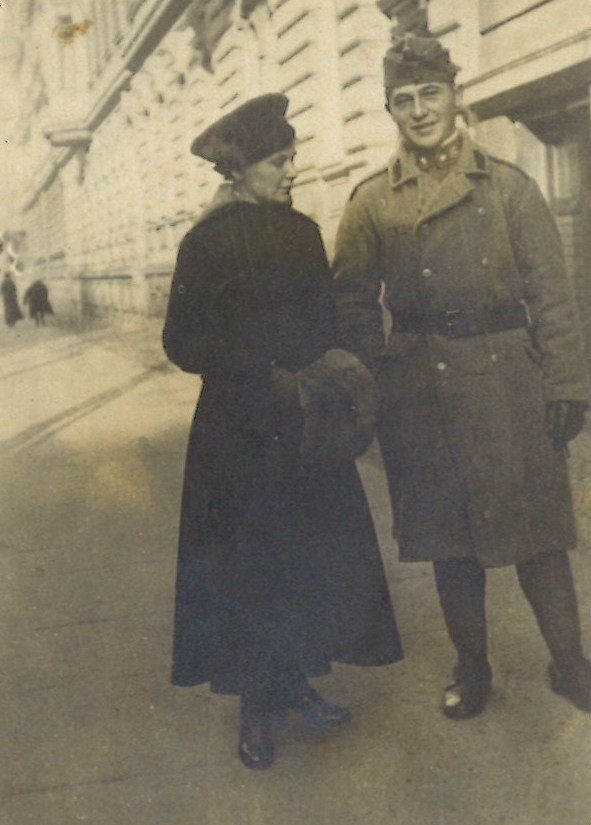
Charlotte's mother, Lucie, and her uncle Franz. He was killed in WWI, ca. 1914-1917.
C. Wollheim Gallery 3
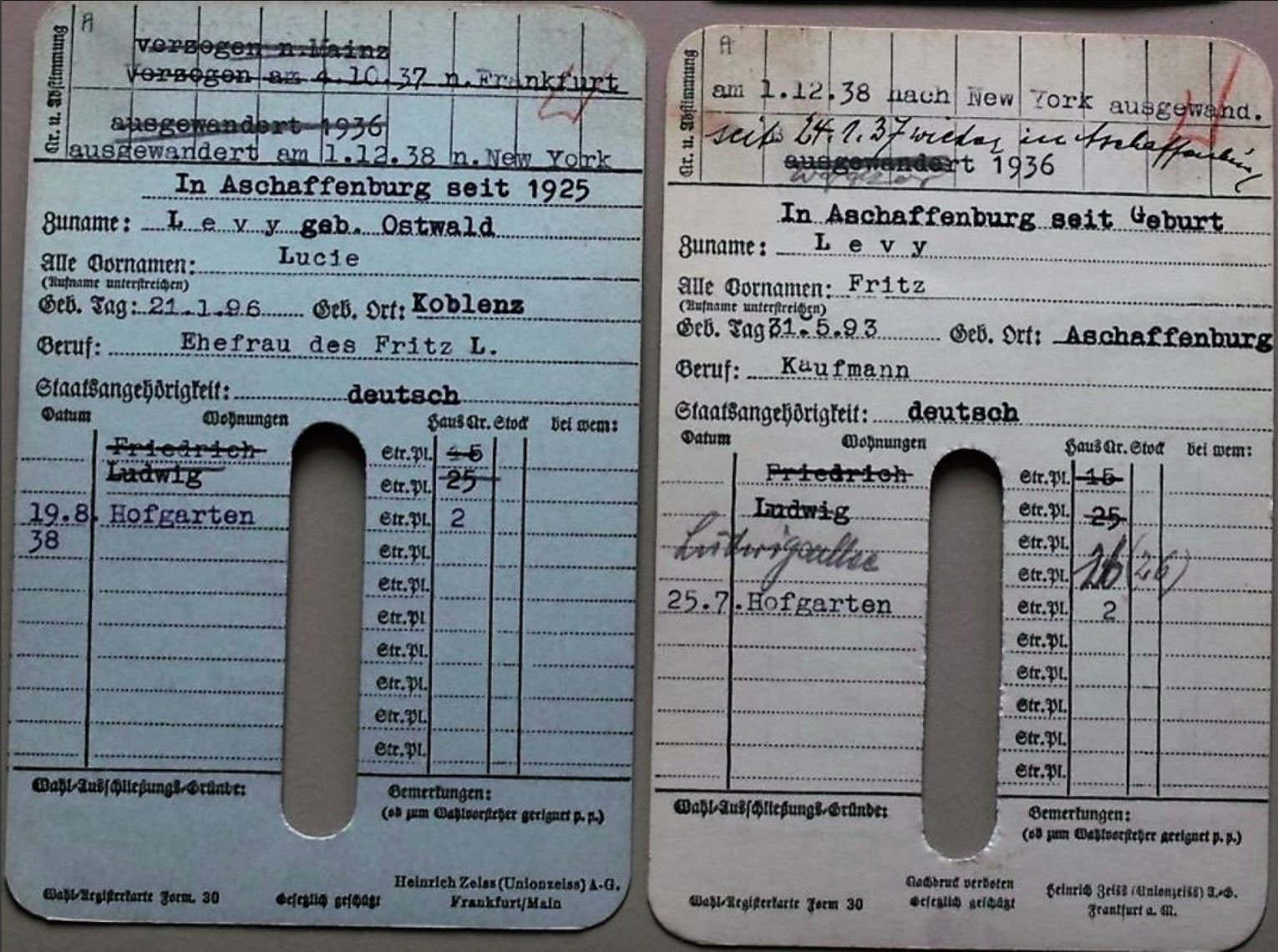
Refugee cards for Charlotte's parents, Lucie and Fritz Levy. Used by Hebrew International Aid Society. Her parents were born in Germany, but were deprived of their citizenship. 1937-38.
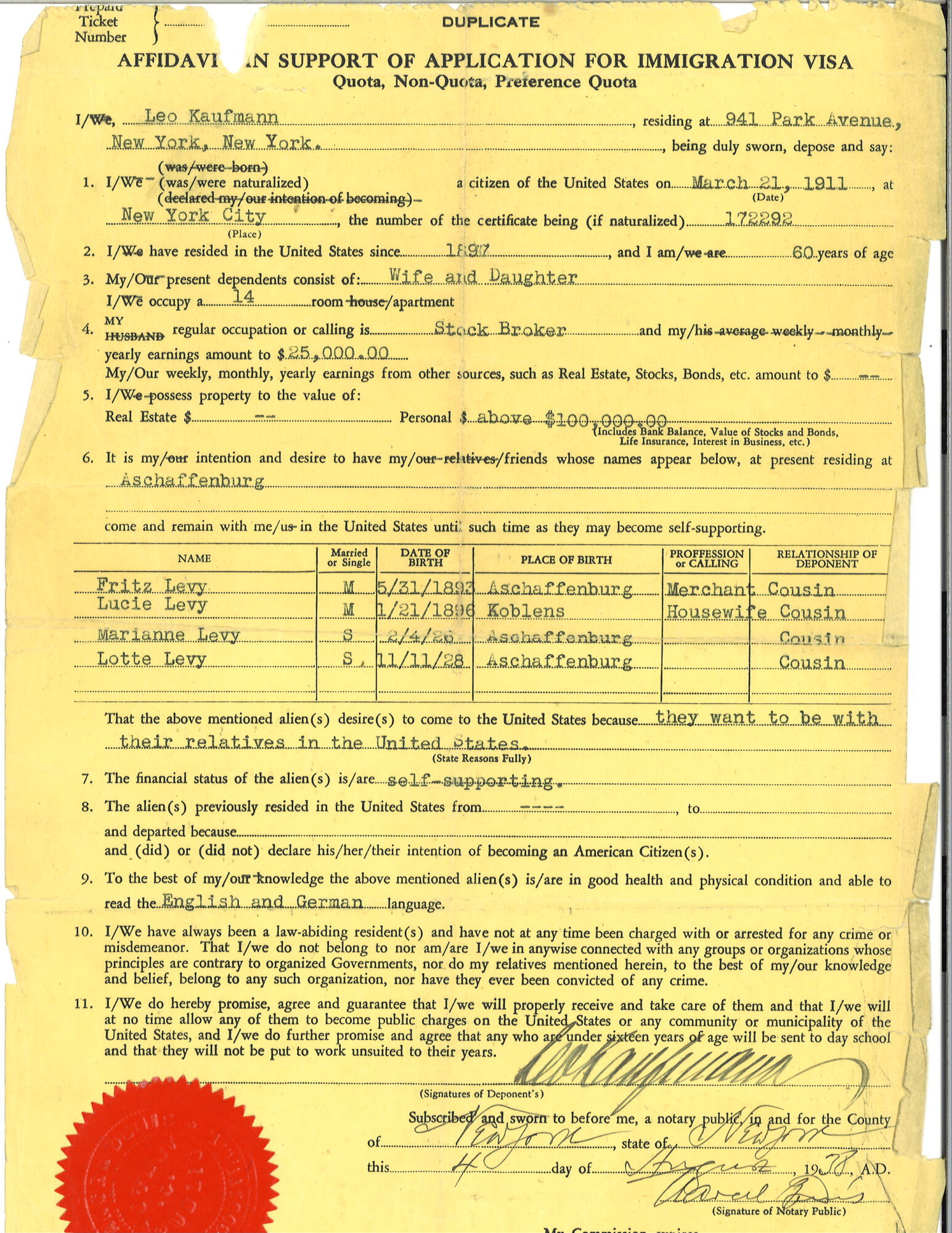
C. Wollheim Gallery 4
Sponsorship affidavit for Charlotte's family to go to the U.S. in 1938.
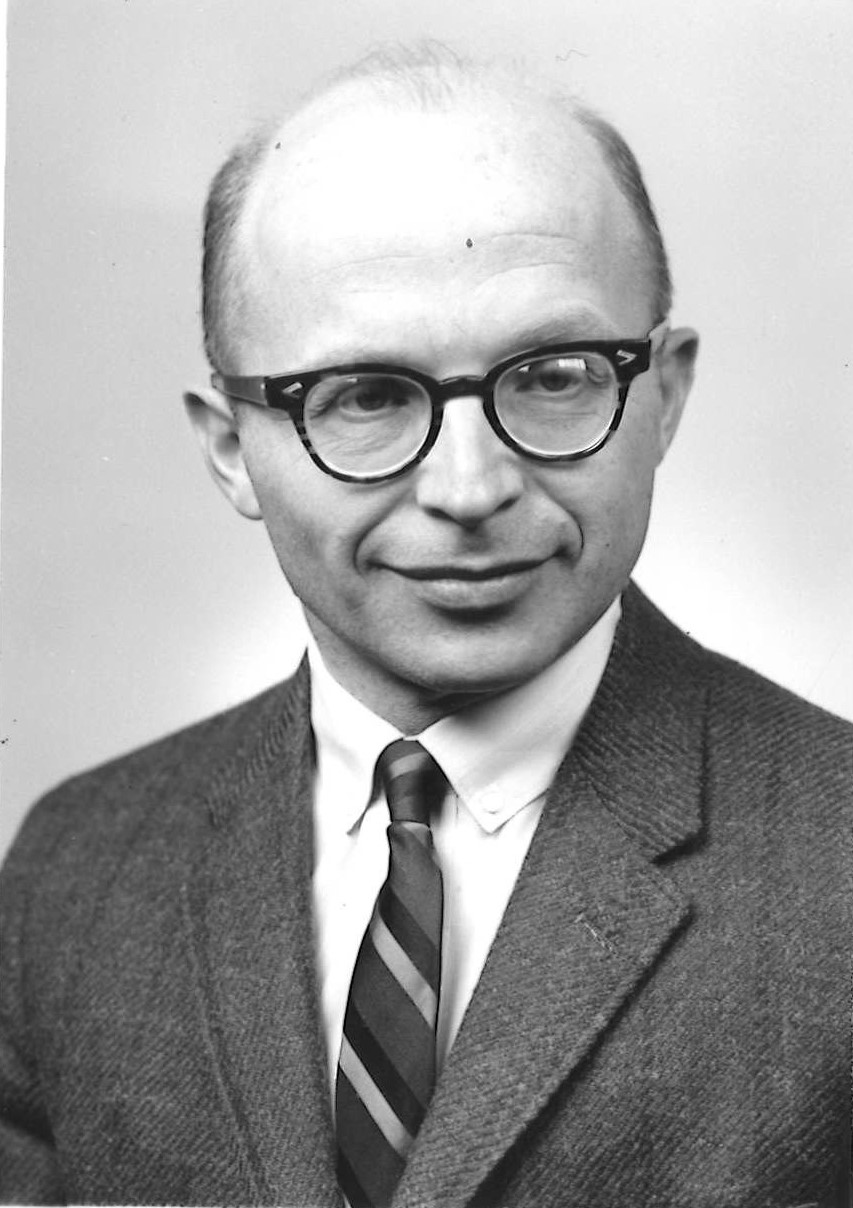
C. Wollheim Gallery 5
Charlotte's first husband Henry Sprung, an Auschwitz survivor, 1953.
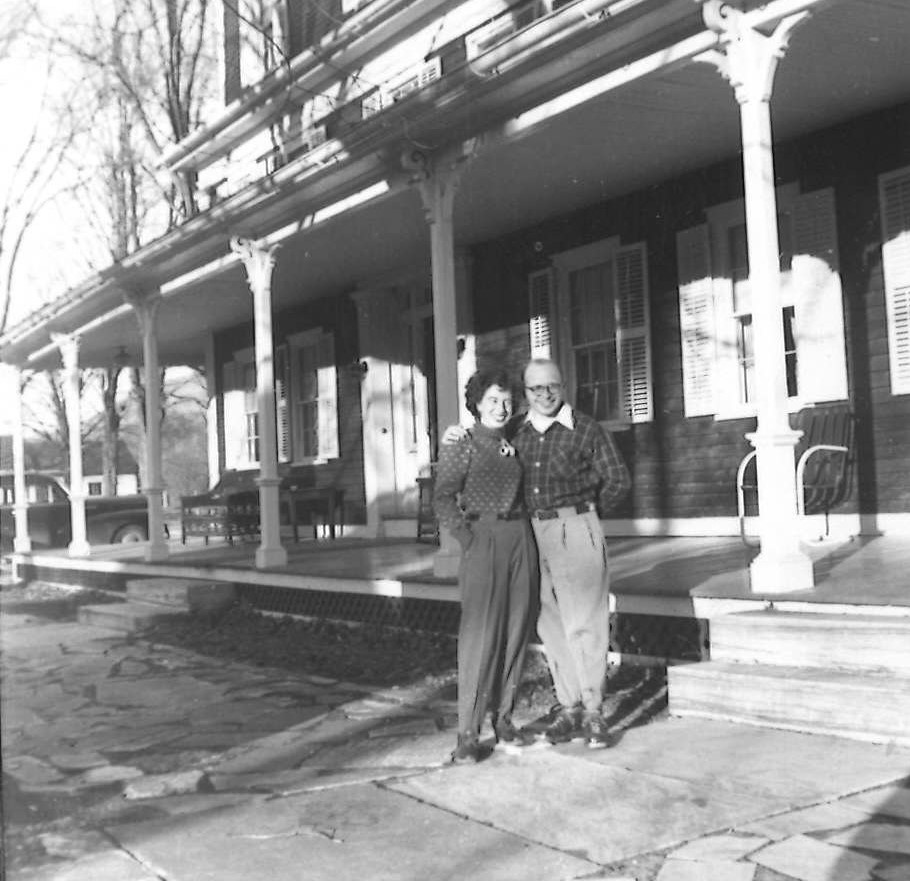
C. Wollheim Gallery 6
Charlotte and Henry (d. 1968) at a ski resort, 1953.
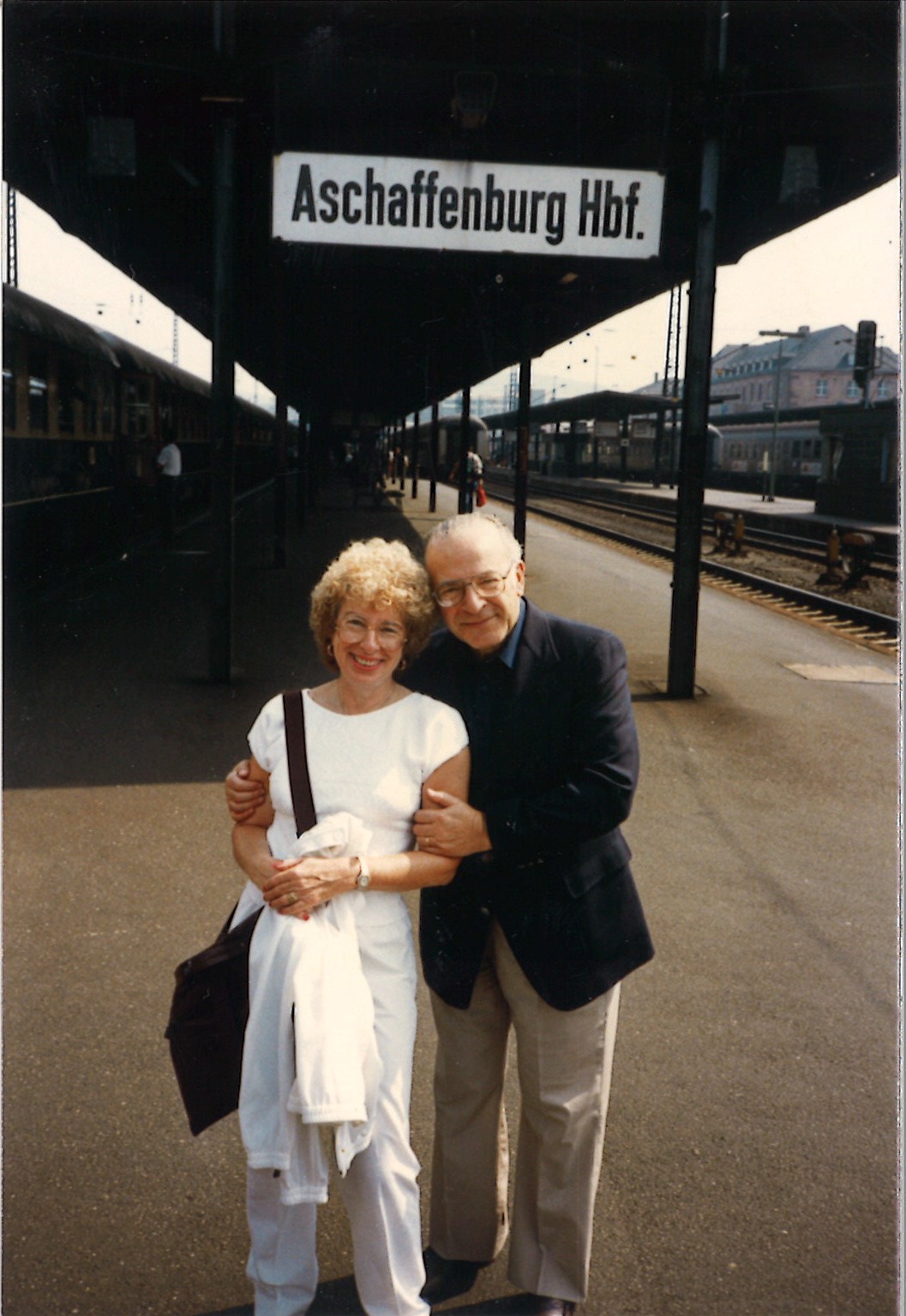
C. Wollheim Gallery 7
Charlotte's second husband Norbert Wollheim, 1981.
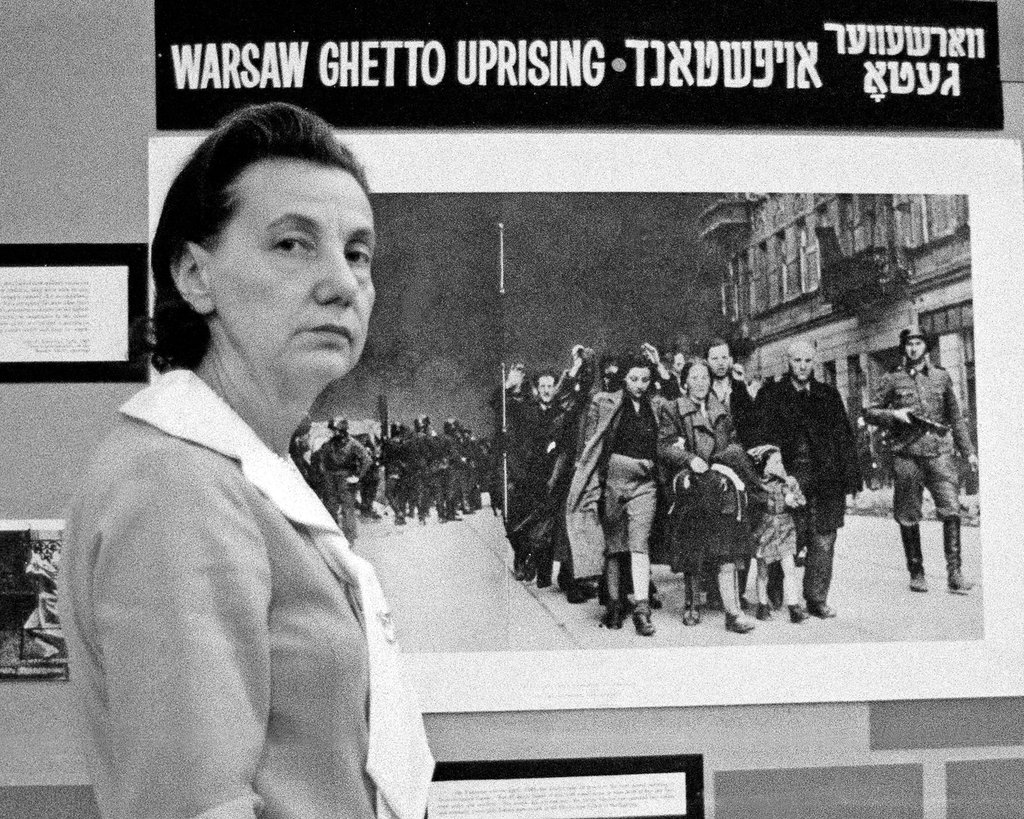
C. Wollheim Gallery 8
Charlotte worked with Vladka Meed from 1988-2003 on Holocaust education programs. (Photo of Vladka Meed)
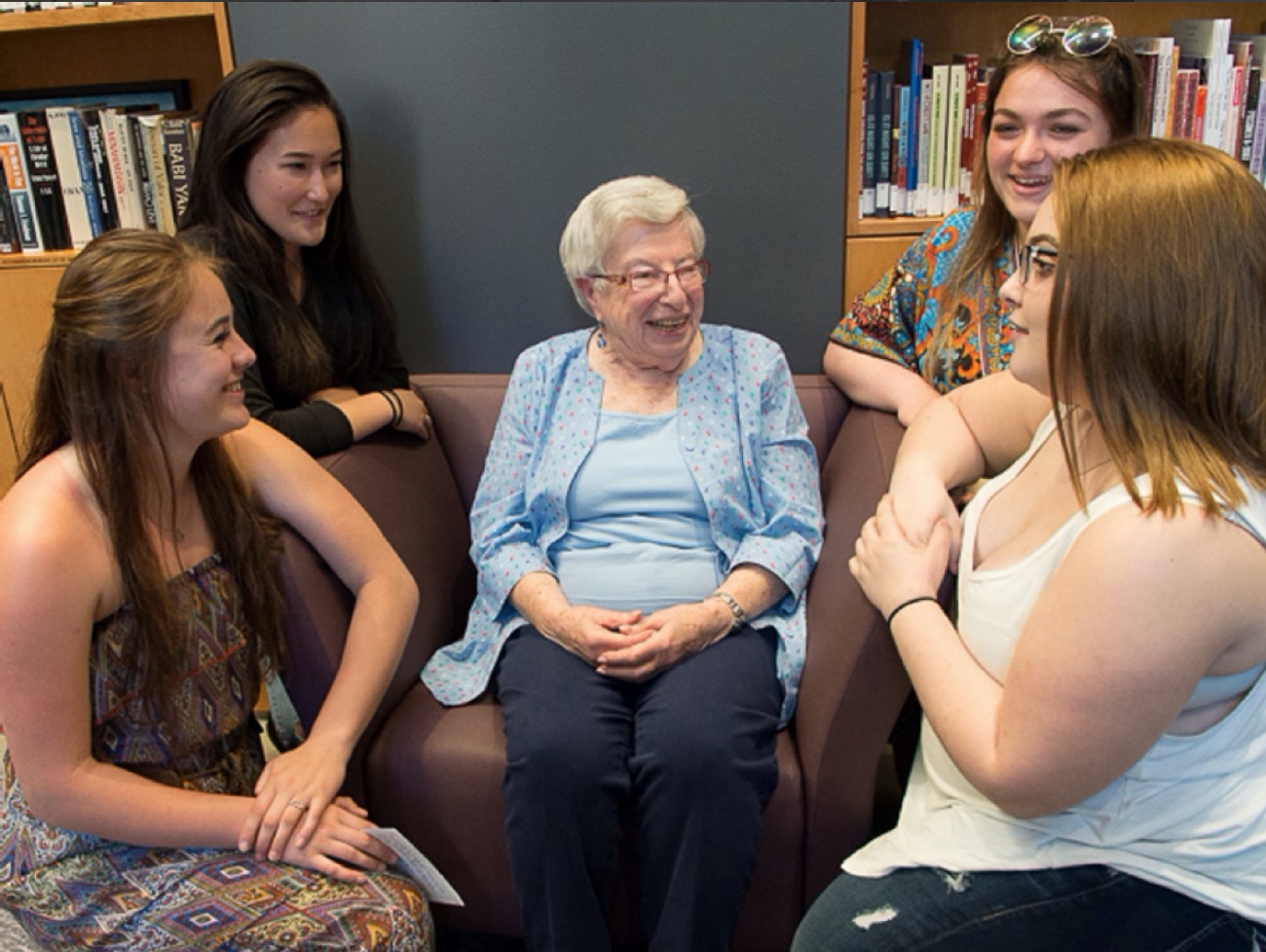
C. Wollheim Gallery 9
Charlotte Wollheim with students, 2018.
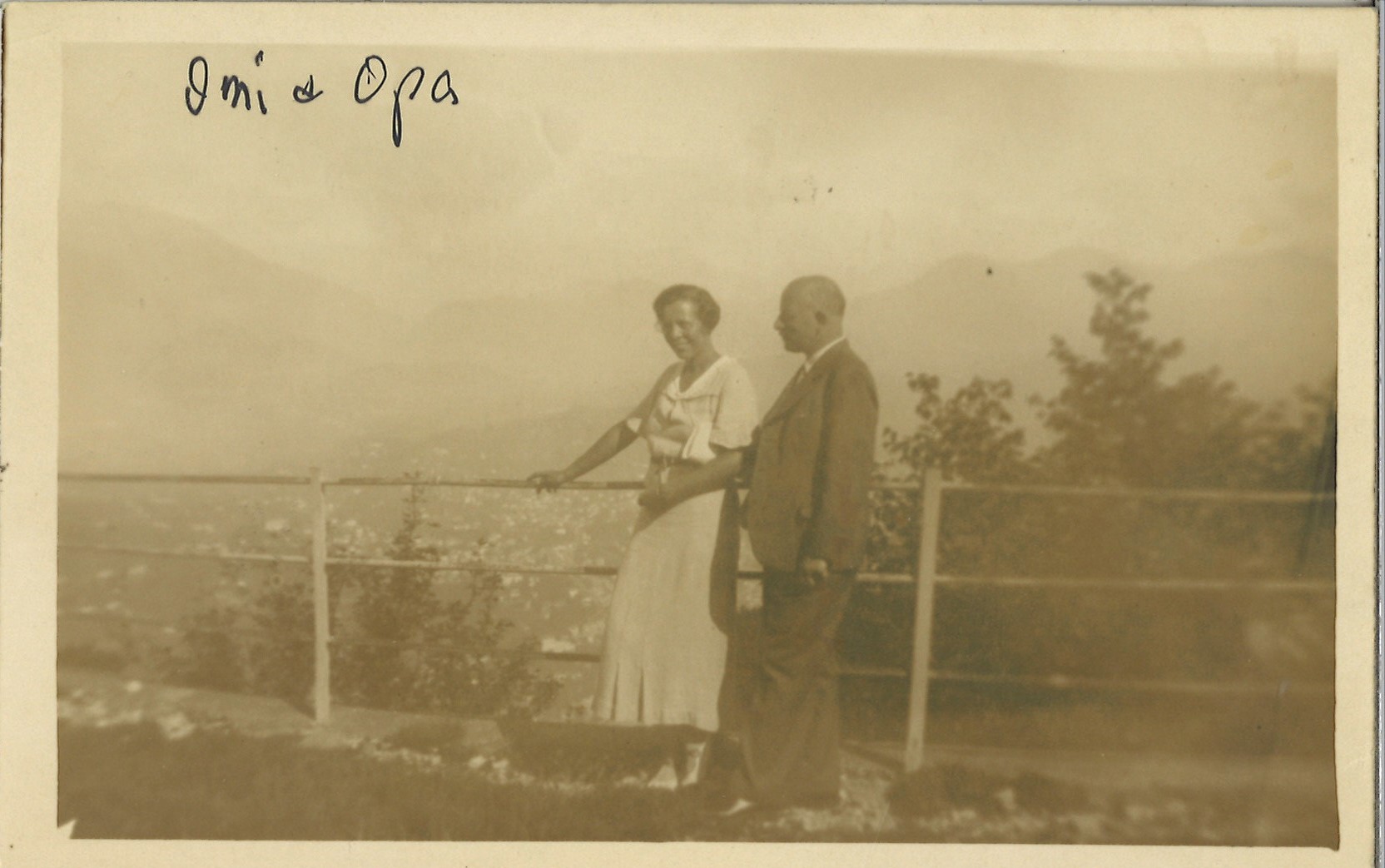
C. Wollheim Gallery 10
Charlotte's parents, Lucie and Fritz Levy, 1934.
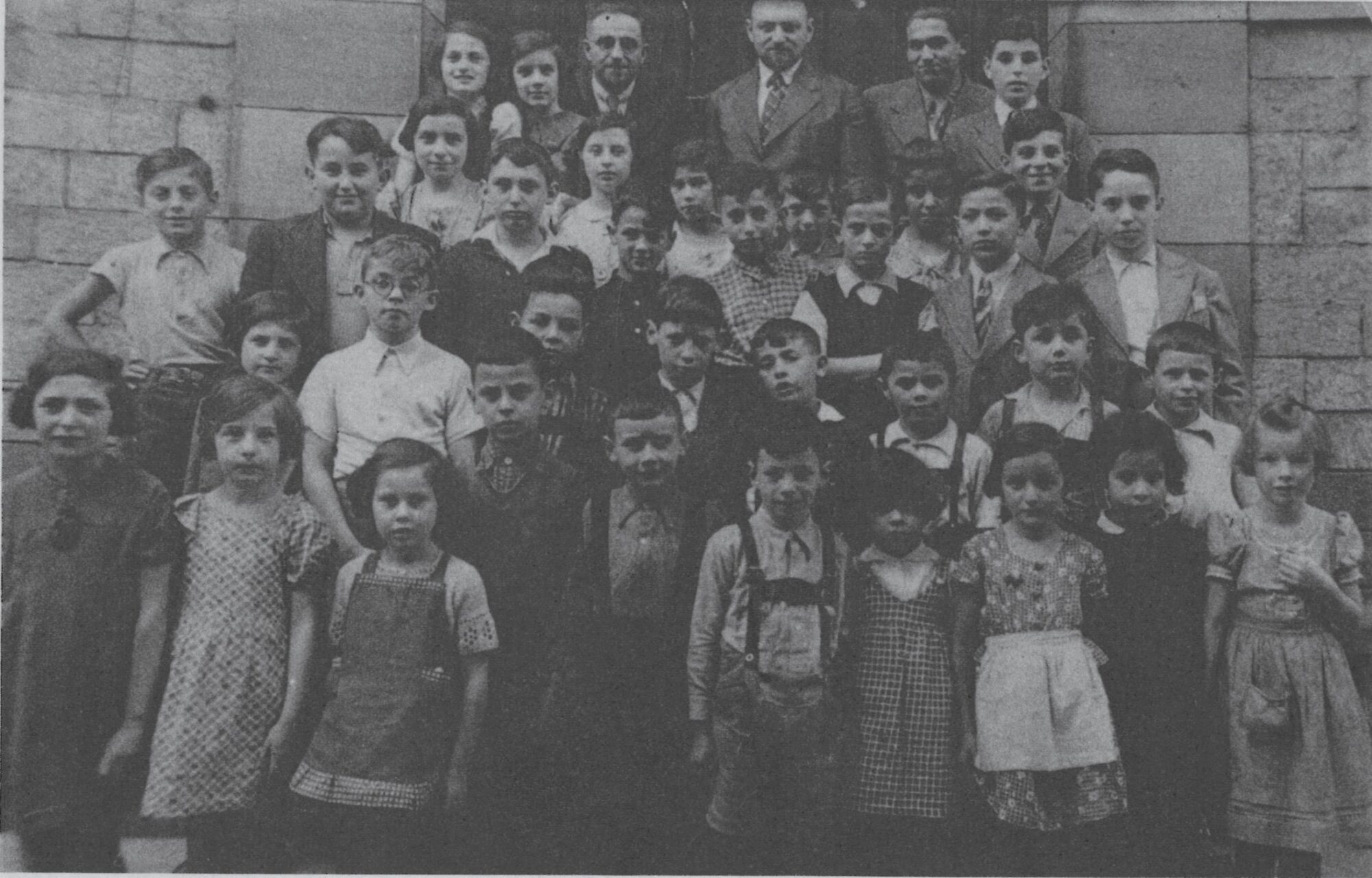
C. Wollheim Gallery 11
Class picture, 1936. Charlotte is second from left in first row. Her cousin, Ernst, is in the front row with suspenders.
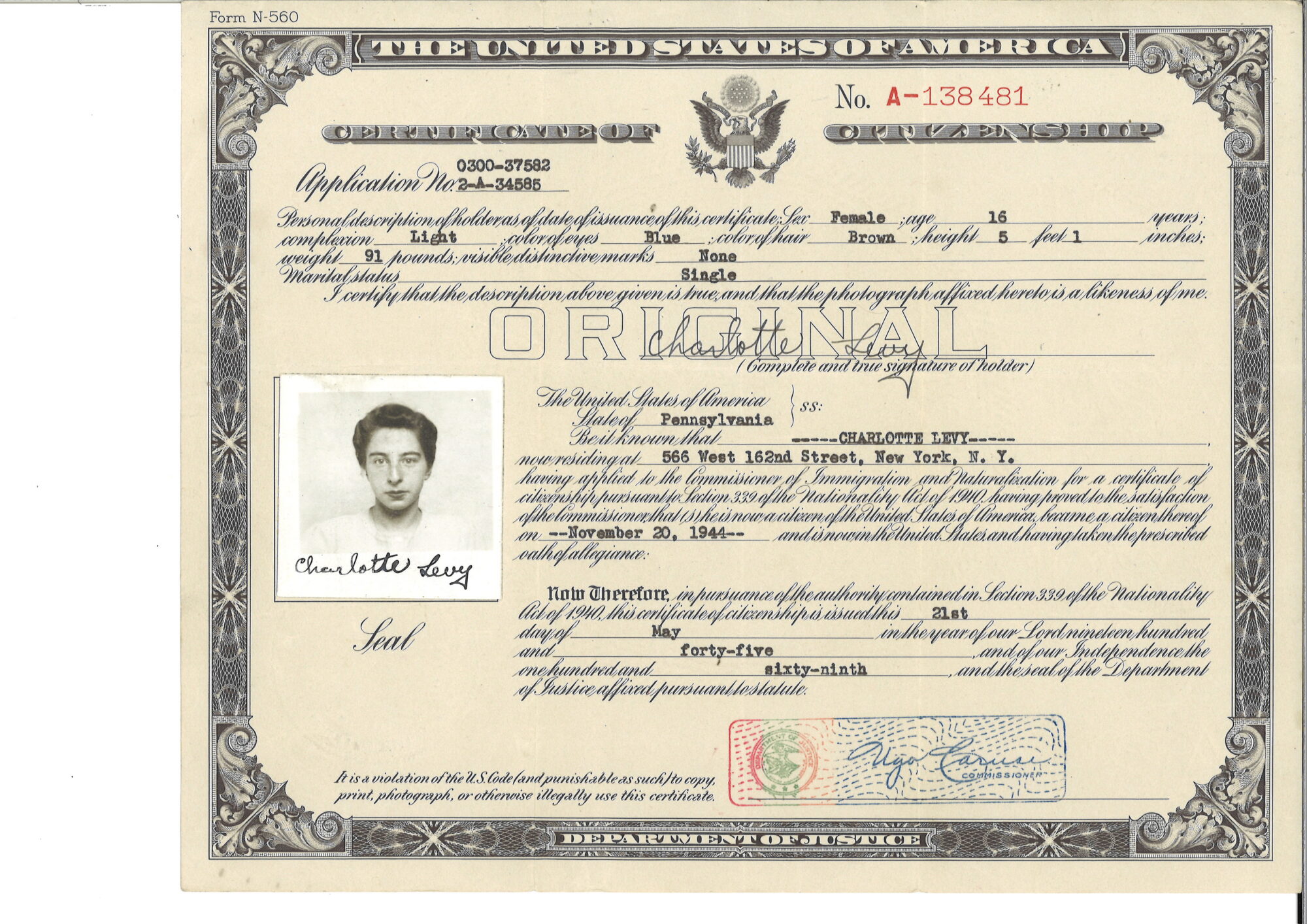
C. Wollheim Gallery 12
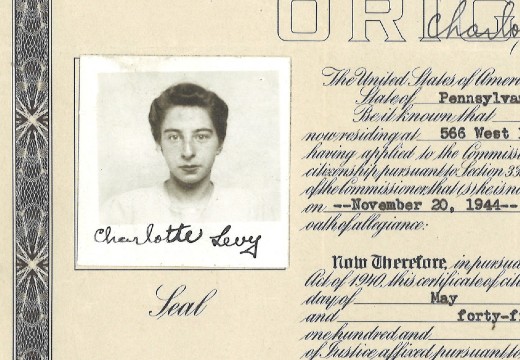
Charlotte became a U.S. citizen in 1944.